-
Shop
- Advanced Technologies
- AI Skills Mastery 2026 Collection
- Beauty
- Best-Sellers
- Calvin Klein
- Car Accessories
- Car Buying & Ownership
- Dating & Social Confidence
- Dating & Social Skills
- Denim
- 7FOR
- AGOLDE
- Antony Morato
- Armani Exchange
- Boss
- Brunello Cucinelli
- Calvin Klein Jeans
- Costume National
- Desigual
- Diesel
- Dolce & Gabbana
- Dsquared²
- Ermanno Scervino
- Fendi
- Gianni Lupo
- Guess Jeans
- Ichi
- Just Cavalli
- Lee
- Levi's
- Liu Jo
- Morgan De Toi
- Mother Denim
- Only
- Pepe Jeans
- Pinko
- Replay
- Tommy Hilfiger Jeans
- Valentino
- Vero Moda
- Digital Resources
- Education & Learning
- Family & Parenting
- Fashion
- Alexander McQueen
- Bags & Wallets
- Balenciaga
- Belts
- Bottega Veneta
- Brunello Cucinelli
- Burberry
- Chanel
- Chloé
- Dior
- Dolce & Gabbana
- Etro
- Fendi
- Gucci
- Hats & Hair Accessories
- Jacquemus
- Jewelry
- Jil Sander
- Jimmy Choo
- Keychains
- Kiton
- Miu Miu
- Off-White
- Prada
- Rick Owens
- Saint Laurent
- Shoes
- Socks & Tights
- Sunglasses
- The Row
- Tom Ford
- Valentino
- Valentino Garavani
- Versace
- Vivienne Westwood
- Watches
- Fashion & Style
- Fashion Accessories
- Financial Education
- Find Your Path Collection
- Fitness
- Furniture
- Gadgets
- Health & Beauty
- Health & Wellness
- Home & Garden
- Home & Kitchen
- Home Styling & Organization
- Home Supplies
- Kids & Babies
- Kitchen
- Lighting
- Nike
- Online Business
- Online Business for Beginners
- Parenting
- Patio, Lawn & Garden
- Personal Growth
- Pet Care
- Pet Supplies
- Pets
- Smart Life with IA
- Sport & Outdoors
- Super Deals
- Travel
- Wealth
- Wealth Building
- Wellness
- YouTube Shorts Best-Sellers
- Popular
- Best deals
Wooden Garden Music Set: Montessori Sound Play for Toddlers
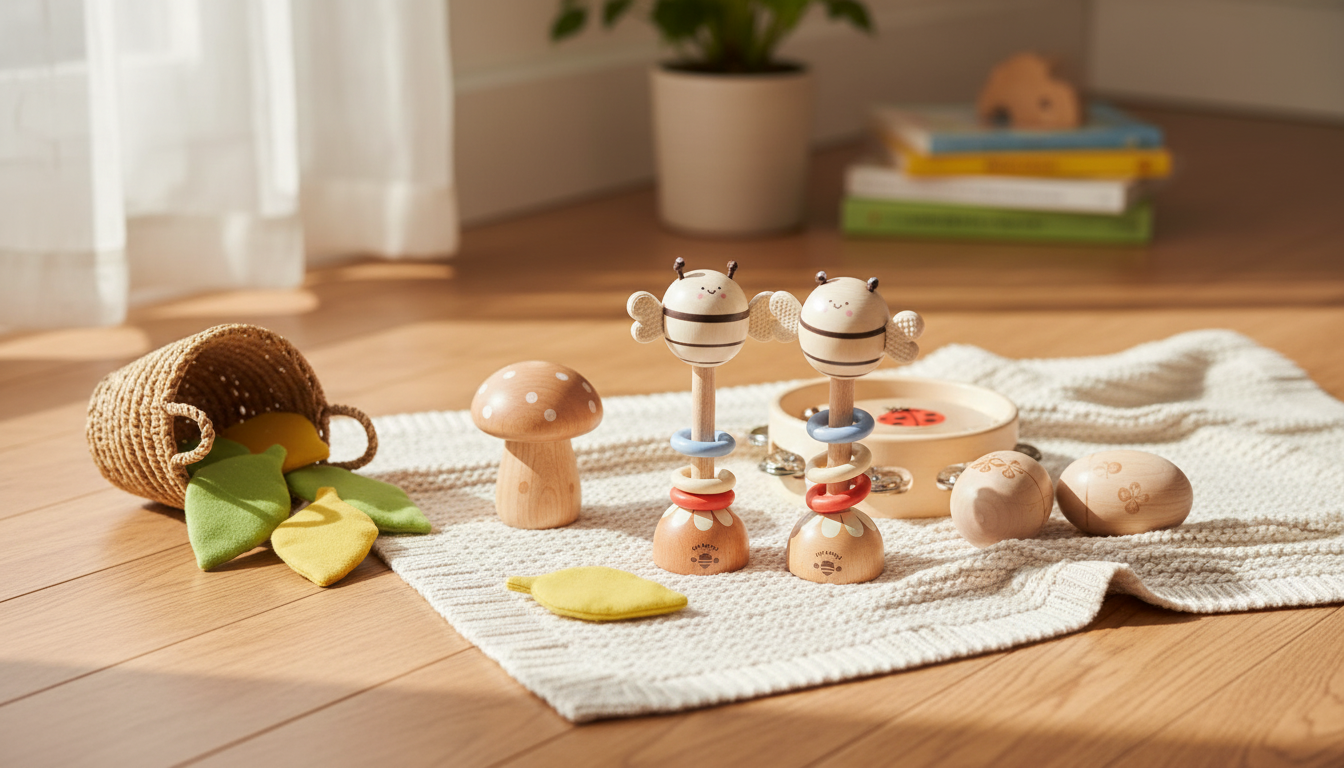
Montessori Wooden Garden Music Set for Babies and Toddlers: Hands-On Sound Play for Early Learning
Gentle sound play helps little ones explore cause-and-effect, rhythm, and coordination through simple, repeatable actions. A wooden, garden-themed music set fits naturally into Montessori-style play: child-led, sensory-rich, and designed for small hands to practice control and concentration. When instruments are simple and inviting, babies and toddlers can experiment, repeat, and refine their movements—one tap, shake, or scrape at a time. For more guidance, see The Arts at Butler Montessori: Creativity Fostered at Every Level.
What makes this music set Montessori-aligned
Montessori-inspired music play works best when the materials encourage independence and focus rather than flashing lights or constant prompts. A wooden garden music set supports that “do, notice, repeat” cycle that young children naturally crave. For further reading, see Materials Spotlight: The Montessori Bells.
- Child-led exploration: encourages self-directed tapping, shaking, and listening without fixed “right” outcomes.
- Concrete cause-and-effect: actions create immediate sound feedback, strengthening early cognitive links.
- Purposeful simplicity: fewer distractions helps toddlers focus on one sound at a time.
- Hands-on skill building: supports fine-motor control, wrist rotation, and bilateral coordination.
- Order and routine: instruments can be placed back in a consistent spot to reinforce tidy habits.
If you’re looking for a child-sized set designed for repeatable, hands-on practice, see the Montessori Wooden Garden Music Set for Babies and Toddlers.
Skills supported through everyday sound play
Early music play isn’t about performing—it’s about experimenting. Over time, small “sound discoveries” can support multiple developmental areas. For general developmental expectations by age, the CDC milestones list is a helpful reference for what skills often emerge as children grow (CDC: Developmental Milestones).
- Auditory discrimination: noticing differences in pitch, volume, and timbre.
- Rhythm and timing: copying simple beats (slow/fast, loud/soft) and pausing on cue.
- Language support: pairing sounds with words (tap, shake, stop, again) and simple songs.
- Emotional regulation: repetitive sound patterns can be calming; loud play can be guided into quiet play.
- Social turn-taking: passing an instrument, waiting, and mirroring a caregiver’s pattern.
Play ideas by age and ability
| Age range | Simple activity | Adult role | Skill focus |
|---|---|---|---|
| 6–12 months (with supervision) | Single-instrument exploration | Name the sound, model gentle tapping | Cause-and-effect, grip strength |
| 12–24 months | Copy two-beat patterns (tap-tap, pause) | Keep patterns short; celebrate stopping on cue | Imitation, impulse control |
| 2–3 years | “Garden sound walk” (choose an instrument for each pretend garden spot) | Offer choices; encourage returning items to place | Sequencing, independence |
| 3+ years | Create a quiet/loud song and switch on signal | Use hand signals; take turns leading | Listening, dynamics, collaboration |
Safety and setup for babies and toddlers
Sound play is most satisfying when the environment supports safe, confident movement. The American Academy of Pediatrics offers practical guidance on choosing and checking toys for young children (AAP: Selecting Appropriate Toys for Young Children).
- Supervise play for infants and young toddlers, especially during excited shaking or banging.
- Choose a soft play surface (rug or foam mat) to reduce noise and protect floors.
- Model gentle handling and demonstrate how to set instruments down safely.
- Check the set regularly for loose parts, splinters, or cracked wood and remove any damaged pieces.
- Use short play windows (5–10 minutes) for younger children, extending as attention grows.
- Create a simple “music shelf” or basket so children can access and return the set independently.
For households that benefit from a calmer wind-down atmosphere after active play, a soft ambient option like the Mini USB Aroma Humidifier & Essential Oil Diffuser with Soft LED Light can help set a quiet, cozy mood (always follow safe-use guidance and keep cords and small accessories out of reach).
How to use it in a Montessori-style routine
Montessori-style routines thrive on predictability and choice. The goal is to make music materials available, not to direct every moment of play. Developmentally appropriate practice emphasizes matching activities to a child’s abilities and allowing active, meaningful engagement (NAEYC: Developmentally Appropriate Practice).
- Offer the set as a choice rather than a scheduled performance; let the child initiate.
- Introduce one instrument at a time for the first few sessions to reduce overwhelm.
- Use three-step language: name it, show it, then let the child try.
- Practice “start/stop” games to build listening and self-control (use a hand signal or a simple word).
- Keep a predictable cleanup ritual: one instrument returned before taking out another.
- Rotate with other shelf activities to maintain novelty without overstimulation.
A helpful rhythm for many families: set the materials out at the same low shelf height, invite a choice, then step back. If the sound gets intense, guide without scolding—demonstrate “soft taps,” offer a quieter instrument, or transition to a start/stop game so the child learns how to adjust volume with control.
What to look for when choosing a wooden music set
- Smooth, child-safe finishes and rounded edges to protect hands and mouths.
- Sturdy construction that tolerates repeated tapping and drops.
- A variety of sound types (tap, shake, scrape) to broaden auditory experience.
- Size and weight appropriate for small hands to lift and control.
- Easy storage so children can manage setup and cleanup independently.
- Noise level that fits the home: consider using a mat or offering “quiet instruments” in the evening.
When the materials are durable and the sounds are interesting but not overwhelming, children tend to return to the work again and again—building concentration through repetition.
A simple gifting guide
FAQ
Are Montessori toys good for toddlers?
Yes—Montessori-style toys can support toddler independence, focus, and hands-on learning by keeping play simple and purposeful. Look for age-appropriate designs that invite real practice, such as grasping, tapping, coordinating both hands, and using basic language around actions like “tap,” “stop,” and “again.”















Leave a comment