-
Shop
- Advanced Technologies
- AI Skills Mastery 2026 Collection
- Beauty
- Beauty & Skincare
- Best-Sellers
- Calvin Klein
- Car Accessories
- Car Buying & Ownership
- Dating & Social Confidence
- Dating & Social Skills
- Denim
- 7FOR
- AGOLDE
- Antony Morato
- Armani Exchange
- Boss
- Brunello Cucinelli
- Calvin Klein Jeans
- Costume National
- Desigual
- Diesel
- Dolce & Gabbana
- Dsquared²
- Ermanno Scervino
- Fendi
- Gianni Lupo
- Guess Jeans
- Ichi
- Just Cavalli
- Lee
- Levi's
- Liu Jo
- Morgan De Toi
- Mother Denim
- Only
- Pepe Jeans
- Pinko
- Replay
- Tommy Hilfiger Jeans
- Valentino
- Vero Moda
- Digital Resources
- Education & Learning
- Family & Parenting
- Fashion
- Alexander McQueen
- Bags & Wallets
- Balenciaga
- Belts
- Bottega Veneta
- Brunello Cucinelli
- Burberry
- Chanel
- Chloé
- Dior
- Dolce & Gabbana
- Etro
- Fendi
- Gucci
- Hats & Hair Accessories
- Jacquemus
- Jewelry
- Jil Sander
- Jimmy Choo
- Keychains
- Kiton
- Miu Miu
- Off-White
- Prada
- Rick Owens
- Saint Laurent
- Shoes
- Socks & Tights
- Sunglasses
- The Row
- Tom Ford
- Valentino
- Valentino Garavani
- Versace
- Vivienne Westwood
- Watches
- Fashion & Style
- Fashion Accessories
- Finance & Career
- Financial Education
- Find Your Path Collection
- Fitness
- Fitness & Movement
- Furniture
- Gadgets
- Health & Beauty
- Health & Wellness
- Home & Garden
- Home & Kitchen
- Home & Lifestyle
- Home Styling & Organization
- Home Supplies
- Hormone & Women’s Health
- Kids & Babies
- Kitchen
- Lighting
- Mindset & Personal Growth
- Nike
- Online Business
- Online Business for Beginners
- Parenting
- Patio, Lawn & Garden
- Personal Growth
- Pet Care
- Pet Supplies
- Pets
- Self-Care & Mental Well-Being
- Sleep & Rest
- Smart Life with IA
- Sport & Outdoors
- Style & Fashion
- Super Deals
- Travel
- Wealth
- Wealth Building
- Wellness
- YouTube Shorts Best-Sellers
- Popular
- Best deals
Marble Run Size Limits at Home: Height, Length & Stability
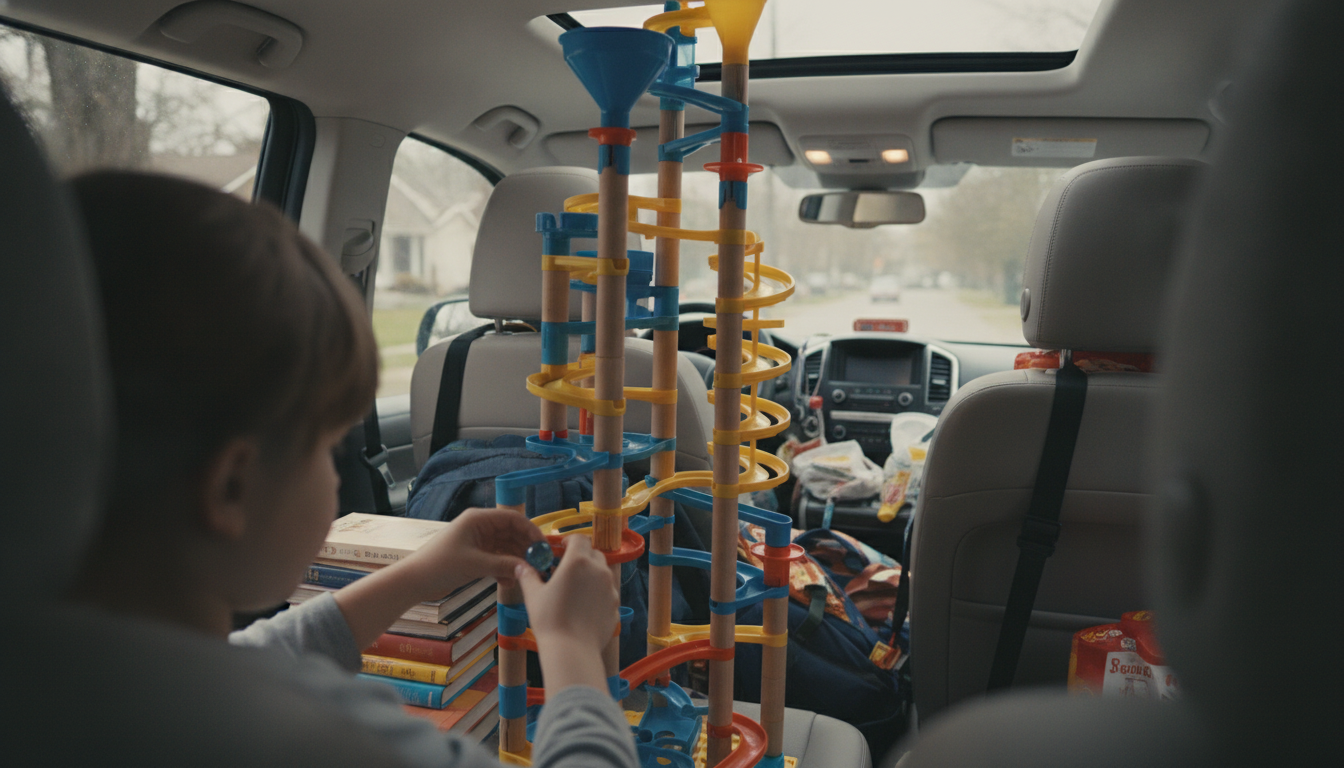
How big can a marble run get for home use before it becomes unstable?
Answer
For most home setups, a marble run usually stays stable up to about 3–4 feet tall (roughly chest height) and 6–10 feet long, as long as it’s built on a rigid base and supported at regular intervals. Beyond that, instability tends to come from sway (tall towers), sag (long spans), and vibration (fast-moving marbles repeatedly striking track joints). In practical terms, the moment you need to “catch” the structure when you nudge a table or walk by, it’s past the comfortable stability limit for typical living spaces.
Height is the biggest risk factor. A tall, narrow footprint behaves like a lever: tiny bumps become big oscillations near the top. If the run exceeds about 4 feet tall, plan on widening the base, anchoring to a wall or backboard, or splitting the build into two shorter towers connected by a low bridge.
Length is more forgiving, but only when it’s modular. Long, uninterrupted track segments can slowly droop and throw off alignment, causing marbles to hop rails or stall. A good rule is to add a support or bracing point every 12–18 inches and avoid “one-piece” elevated highways longer than a couple of feet.
Other signs you’re nearing the instability threshold: frequent derailments at joints, marbles losing speed in curves because angles shift, and repeated micro-adjustments after each run. If you want a large, display-worthy build that still behaves predictably, use a solid baseboard, keep heavier elements low, and treat big builds as linked sections rather than one giant free-standing tower. For more build-and-tune guidance, see this futuristic marble run puzzle guide.
FAQ
What’s the best way to anchor a marble run without damaging walls?
Mount the run to a freestanding backboard or pegboard base that leans against the wall, then stabilize it with a wide floor footprint. For light contact points, removable adhesive strips can help reduce sway without leaving permanent marks.
Recommended for you



Stainless Steel vs Silicone for Baby Feeding Sets
Jul 23, 2026













Leave a comment