-
Shop
- Advanced Technologies
- AI Skills Mastery 2026 Collection
- Beauty
- Best-Sellers
- Calvin Klein
- Car Accessories
- Car Buying & Ownership
- Dating & Social Confidence
- Dating & Social Skills
- Denim
- 7FOR
- AGOLDE
- Antony Morato
- Armani Exchange
- Boss
- Brunello Cucinelli
- Calvin Klein Jeans
- Costume National
- Desigual
- Diesel
- Dolce & Gabbana
- Dsquared²
- Ermanno Scervino
- Fendi
- Gianni Lupo
- Guess Jeans
- Ichi
- Just Cavalli
- Lee
- Levi's
- Liu Jo
- Morgan De Toi
- Mother Denim
- Only
- Pepe Jeans
- Pinko
- Replay
- Tommy Hilfiger Jeans
- Valentino
- Vero Moda
- Digital Resources
- Education & Learning
- Family & Parenting
- Fashion
- Alexander McQueen
- Bags & Wallets
- Balenciaga
- Belts
- Bottega Veneta
- Brunello Cucinelli
- Burberry
- Chanel
- Chloé
- Dior
- Dolce & Gabbana
- Etro
- Fendi
- Gucci
- Hats & Hair Accessories
- Jacquemus
- Jewelry
- Jil Sander
- Jimmy Choo
- Keychains
- Kiton
- Miu Miu
- Off-White
- Prada
- Rick Owens
- Saint Laurent
- Shoes
- Socks & Tights
- Sunglasses
- The Row
- Tom Ford
- Valentino
- Valentino Garavani
- Versace
- Vivienne Westwood
- Watches
- Fashion & Style
- Fashion Accessories
- Financial Education
- Find Your Path Collection
- Fitness
- Furniture
- Gadgets
- Health & Beauty
- Health & Wellness
- Home & Garden
- Home & Kitchen
- Home Styling & Organization
- Home Supplies
- Kids & Babies
- Kitchen
- Lighting
- Nike
- Online Business
- Online Business for Beginners
- Parenting
- Patio, Lawn & Garden
- Personal Growth
- Pet Care
- Pet Supplies
- Pets
- Smart Life with IA
- Sport & Outdoors
- Style & Fashion
- Super Deals
- Travel
- Wealth
- Wealth Building
- Wellness
- YouTube Shorts Best-Sellers
- Popular
- Best deals
Side Hustle to Full-Time: Validate, Price, and Scale Fast
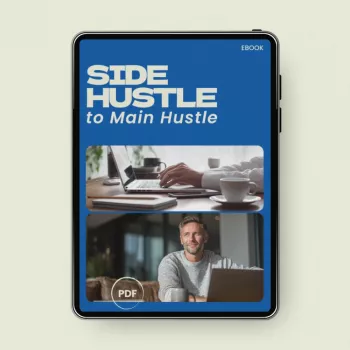
Side Hustle to Main Hustle: Turn Your Passion into a Career (Without Guesswork)
Turning a passion project into dependable income takes more than motivation—it takes validation, a clear offer, repeatable marketing, and a realistic transition plan. The goal isn’t to “work harder.” It’s to choose a path that matches your skills and schedule, prove people will pay, set pricing that supports real life, and build a simple system you can run consistently until the switch to full-time becomes a low-drama decision.
Start with a clear target: lifestyle, income, and runway
Before picking a business model or designing a logo, get specific about what “success” needs to look like for your life. Side hustles become stressful when the goal is vague and the timeline is imaginary.
- Define the outcome: extra spending money, replacing a salary, or building an asset that can run with a small team.
- Pick an income number and timeline: many people aim to replace 60–80% of take-home pay before leaving a job.
- Calculate your runway: essential monthly expenses, minimum savings, and the earliest safe transition date.
- Set constraints upfront: hours per week, energy after work, and non-negotiables (family time, health, commute).
- Choose one metric for the next 30 days: leads, sales calls booked, or first 10 customers—one target prevents scattered effort.
Find the overlap: passion, skill, and a painful problem
Passion becomes a career when it connects to a real problem that someone wants solved enough to pay for it. Start by translating what you love into an outcome people buy.
- List passions that last: the topics you return to for months, not days.
- List skills that create results: writing, teaching, organizing, designing, fixing, coaching, analyzing, selling.
- Translate passion into outcomes: entertainment (audience), transformation (coaching/education), convenience (done-for-you), or access (community).
- Choose a specific audience to start: a job role, life stage, niche hobby, or local community—specific beats broad when time is limited.
- Validate with real conversations: ask what’s hard, what they tried, and what it costs them (time, money, stress).
Then write a one-sentence offer you can test quickly: “Help [audience] get [result] without [common obstacle] in [timeframe].”
Pick a side hustle model that can scale into a career
Different models win under different constraints. If your schedule is tight, you usually want higher prices and simpler delivery. If you already have an audience, you can lean into products sooner.
Common paths from side hustle to full-time work
| Model | Best for | Time to first revenue | Scaling lever | Watch-outs |
|---|---|---|---|---|
| Freelance/service | Fast cash flow + skill-based work | Days to weeks | Raise rates, retainers, referrals | Income tied to hours unless productized |
| Productized service | Predictable delivery + repeatable packages | Weeks | Standardize scope, upsells, team support | Scope creep if boundaries are unclear |
| Digital products | Creators/experts with an audience | Weeks to months | Distribution, affiliates, bundles | Needs trust + consistent traffic |
| Coaching/consulting | Transformation with clear outcomes | Weeks | Frameworks, group programs | Requires strong positioning and results |
| E-commerce | Product-led brands | Weeks to months | Ads, SEO, wholesale, subscriptions | Inventory, returns, thin margins |
Validate demand before building: simple tests that work
Validation is when money changes hands—or when strangers actively try to get you to take their money. Anything else is a clue, not proof.
Pricing and positioning: earn enough to make the switch realistic
Build a simple sales and marketing system you can run after work
Operations that keep you profitable: time, money, and basics
- Separate finances: dedicated business account, weekly tracking, and set aside taxes from every payment. The IRS self-employed tax center is a solid reference for planning basics: https://www.irs.gov/businesses/small-businesses-self-employed/self-employed-individuals-tax-center.
- Document delivery: checklists and templates make your work repeatable (and later delegable).
- Protect focus: limit active projects, batch work, and keep one “next action” list.
- Use simple KPIs: leads per week, conversion rate, average order value, and monthly profit.
- Plan for sustainability: sleep, movement, and realistic workloads help you avoid burnout during the transition.
When to go full-time: a decision checklist
For planning support, the U.S. Small Business Administration has practical guidance for building a real plan: https://www.sba.gov/business-guide/plan-your-business. If you’re researching long-term demand for a field, the Occupational Outlook Handbook is a useful reality check: https://www.bls.gov/ooh/.
A structured plan and workbook to move faster
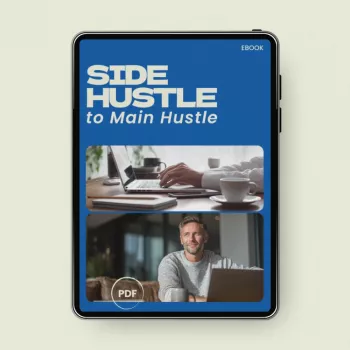
- Side Hustle to Main Hustle: The Ultimate Guide on How to Turn Your Passion into a Career (digital guide) for offer clarity, validation steps, pricing structure, and transition planning.
- Losing Body Fat Percentage eBook as an example of a focused digital product built around a specific outcome (ideal if your passion is fitness coaching or education).
- Helping Teens Build Healthy Connections in a Digital World – eBook as an example of packaging expertise for a defined audience (parents/educators), useful if your passion is teaching, counseling, or family support.
FAQ
What is the most profitable side hustle?
The most profitable side hustle is usually the one with strong demand, pricing power, and low delivery costs—often specialized services (consulting, high-skill freelancing) or productized offers. Evaluate market size, willingness to pay, competition, and whether you can deliver results efficiently without adding lots of expenses.
How can I turn my passion into a career?
Pick a specific audience and problem, validate it with paid tests, and create one focused offer with clear outcomes. Build proof through early customers, systemize marketing and delivery, and transition only after stable profit and a savings buffer make the move realistic.
How to make $10,000 a month side hustle?
Use simple math: price × number of monthly buyers. Start with a higher-ticket core offer, keep lead generation consistent, improve conversion with proof and clear positioning, add retainers for stability, and raise rates gradually as results and demand become consistent.
Recommended for you
Best Odor-Control Litter-Robot: Why LR4 Wins
Jul 20, 2026













Leave a comment