-
Shop
- Advanced Technologies
- AI Skills Mastery 2026 Collection
- Beauty
- Best-Sellers
- Calvin Klein
- Car Accessories
- Car Buying & Ownership
- Dating & Social Confidence
- Dating & Social Skills
- Denim
- 7FOR
- AGOLDE
- Antony Morato
- Armani Exchange
- Boss
- Brunello Cucinelli
- Calvin Klein Jeans
- Costume National
- Desigual
- Diesel
- Dolce & Gabbana
- Dsquared²
- Ermanno Scervino
- Fendi
- Gianni Lupo
- Guess Jeans
- Ichi
- Just Cavalli
- Lee
- Levi's
- Liu Jo
- Morgan De Toi
- Mother Denim
- Only
- Pepe Jeans
- Pinko
- Replay
- Tommy Hilfiger Jeans
- Valentino
- Vero Moda
- Digital Resources
- Education & Learning
- Family & Parenting
- Fashion
- Alexander McQueen
- Bags & Wallets
- Balenciaga
- Belts
- Bottega Veneta
- Brunello Cucinelli
- Burberry
- Chanel
- Chloé
- Dior
- Dolce & Gabbana
- Etro
- Fendi
- Gucci
- Hats & Hair Accessories
- Jacquemus
- Jewelry
- Jil Sander
- Jimmy Choo
- Keychains
- Kiton
- Miu Miu
- Off-White
- Prada
- Rick Owens
- Saint Laurent
- Shoes
- Socks & Tights
- Sunglasses
- The Row
- Tom Ford
- Valentino
- Valentino Garavani
- Versace
- Vivienne Westwood
- Watches
- Fashion & Style
- Fashion Accessories
- Financial Education
- Find Your Path Collection
- Fitness
- Furniture
- Gadgets
- Health & Beauty
- Health & Wellness
- Home & Garden
- Home & Kitchen
- Home Styling & Organization
- Home Supplies
- Kids & Babies
- Kitchen
- Lighting
- Nike
- Online Business
- Online Business for Beginners
- Parenting
- Patio, Lawn & Garden
- Personal Growth
- Pet Care
- Pet Supplies
- Pets
- Smart Life with IA
- Sport & Outdoors
- Super Deals
- Travel
- Wealth
- Wealth Building
- Wellness
- YouTube Shorts Best-Sellers
- Popular
- Best deals
Rental Arbitrage & Master Leasing: Get STR Access

Keys to the Castle: A Practical Path to Rental Arbitrage and Master Leasing for Short-Term Stays
Getting access to the right properties is the hardest part of building a short-term rental business without buying real estate. Rental arbitrage and master leasing can unlock that access—when the rules are clear, the owner is aligned, and the numbers are disciplined. Below is a practical, operator-focused breakdown of how these models work, what approval and compliance hurdles to expect, and which systems keep operations stable once a unit is live.
What “rental arbitrage” and “master leasing” actually mean
Rental arbitrage is leasing a property long-term and operating it as a short-term rental (STR) with the owner’s explicit permission. The goal is to earn a spread between fixed monthly rent and variable booking revenue, while controlling furnishing, guest experience, and day-to-day operations.
Master leasing usually means leasing multiple units (or an entire building/floor) and taking primary responsibility for the rent payments, then subleasing and/or operating stays under a negotiated structure. It can improve unit economics when negotiated well—especially when you standardize setup and turnovers across similar units.
In both models, access is everything: owner approval, clear contract terms, and predictable operating costs determine whether the business stays steady or becomes a constant scramble.
Who this model fits (and who should pause)
This path tends to work best for operators who can handle sales conversations and hospitality standards at the same time. You’ll be communicating with property owners, cleaners, maintenance techs, and guests—often in the same day.
Best fit
- Comfortable negotiating and explaining a professional hosting plan.
- Willing to run checklists, solve problems quickly, and protect review quality.
- Ready for operational routines: cleaning coordination, restocking, guest messaging, and maintenance triage.
Reasons to pause
- Local rules are unclear or enforcement is aggressive.
- You can’t get owner permission in writing (not a verbal “sure”).
- Savings won’t cover several months of rent, utilities, and surprise repairs during slow periods.
Finding viable markets and properties
Start with rules, then demand. Before you fall in love with a neighborhood’s revenue numbers, confirm that short-term stays are legal and that the building/HOA won’t block them. Then validate demand drivers that aren’t dependent on one annual event.
Demand signals that support consistency
- Business travel corridors, hospitals/medical centers, universities, and rotating professional contracts.
- Multiple attractions (not just one seasonal hotspot).
- Events that fill gaps instead of being the only busy weeks.
Property traits that simplify operations
- Durable finishes and easy-to-clean surfaces.
- Reliable parking and straightforward access.
- Strong Wi-Fi options and safe entry (smart locks where allowed).
- Reasonable building policies that won’t trigger frequent complaints.
Quick viability checklist
| Checkpoint | What to confirm | Why it matters |
|---|---|---|
| Local rules | Permits, caps, zoning, taxes | Avoids shutdown risk and fines |
| Building/HOA policy | Written permission for short-term stays | Prevents complaints and forced removal |
| Owner alignment | Arbitrage allowed + expectations defined | Reduces conflict and surprises |
| Unit economics | Rent + utilities + cleaning + fees covered | Protects cash flow in slower months |
| Operations coverage | Cleaner, backups, maintenance contacts | Keeps reviews and response times strong |
Getting owner approval: positioning, proof, and boundaries
Owners say yes when their risk goes down and their outcomes become predictable. Lead with operational clarity rather than “it’ll earn more on Airbnb.” A consistent pitch is: guaranteed rent, professional oversight, and firm guest rules.
- Risk reduction: automated rent payments, professional cleaning, routine inspections, and documented guest screening rules.
- Operator profile: what you do, how you communicate, and how issues are handled 24/7 (including who answers calls at 2 a.m.).
- Safeguards: higher deposit, scheduled walkthroughs, noise monitoring where legal, and insurance alignment.
- Boundaries: max occupancy, strict party policy, smoking rules, and the exact enforcement steps when violations happen.
Owners also respond well to a “no surprises” posture: you commit to transparency, proactive maintenance reporting, and fast resolution—so the property remains protected.
Contracts and compliance essentials (before listing goes live)
Do not list a unit until permission and responsibilities are explicit in writing. Many operational blowups happen because an operator assumes a clause exists, or assumes the city “doesn’t care.”
For platform and compliance references, review Airbnb’s responsible hosting guidance (Airbnb Help Center: Responsible hosting), general business compliance resources (FTC business guidance), and small-business tax basics (IRS small business and self-employed tax center).
Launching the unit: setup, listing, and first 30 days
Small comfort upgrades can also support better reviews when they’re easy to maintain. For example, adding a light scent option for the entryway (where allowed) can be a low-effort touch—some hosts use items like the Mini USB Aroma Humidifier & Essential Oil Diffuser with Soft LED Light in appropriate spaces, while still keeping fragrance sensitivity in mind and following house rules.
Scaling beyond one property without breaking operations
Digital download guide: what it helps streamline
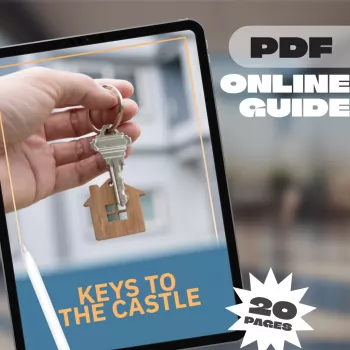
If you want a tighter, repeatable workflow for getting approved and staying organized, the Keys to the Castle digital download guide is designed as a practical reference you can keep open while you evaluate units, talk to owners, and build your operating system.
FAQ
Is rental arbitrage allowed on Airbnb?
It can be, but it must comply with local laws, platform rules, and building/HOA policies. You also need explicit permission from the property owner or leaseholder in writing before operating short-term stays.
What should be in a rental arbitrage or master lease agreement?
Include written STR permission, term and renewal options, rent and late fees, utility responsibility, furnishing ownership, maintenance and damage handling, inspection rights, guest rules, insurance expectations, and clear termination clauses.
How much money is needed to start?
Costs vary by market and unit size, but typically include a security deposit, first month’s rent, furnishings, setup items (locks and supplies), initial utilities, and a reserve buffer for slow months, repairs, or chargebacks.















Leave a comment