-
Shop
- Advanced Technologies
- AI Skills Mastery 2026 Collection
- Beauty
- Best-Sellers
- Calvin Klein
- Car Accessories
- Car Buying & Ownership
- Dating & Social Confidence
- Dating & Social Skills
- Denim
- 7FOR
- AGOLDE
- Antony Morato
- Armani Exchange
- Boss
- Brunello Cucinelli
- Calvin Klein Jeans
- Costume National
- Desigual
- Diesel
- Dolce & Gabbana
- Dsquared²
- Ermanno Scervino
- Fendi
- Gianni Lupo
- Guess Jeans
- Ichi
- Just Cavalli
- Lee
- Levi's
- Liu Jo
- Morgan De Toi
- Mother Denim
- Only
- Pepe Jeans
- Pinko
- Replay
- Tommy Hilfiger Jeans
- Valentino
- Vero Moda
- Digital Resources
- Education & Learning
- Family & Parenting
- Fashion
- Alexander McQueen
- Bags & Wallets
- Balenciaga
- Belts
- Bottega Veneta
- Brunello Cucinelli
- Burberry
- Chanel
- Chloé
- Dior
- Dolce & Gabbana
- Etro
- Fendi
- Gucci
- Hats & Hair Accessories
- Jacquemus
- Jewelry
- Jil Sander
- Jimmy Choo
- Keychains
- Kiton
- Miu Miu
- Off-White
- Prada
- Rick Owens
- Saint Laurent
- Shoes
- Socks & Tights
- Sunglasses
- The Row
- Tom Ford
- Valentino
- Valentino Garavani
- Versace
- Vivienne Westwood
- Watches
- Fashion & Style
- Fashion Accessories
- Financial Education
- Find Your Path Collection
- Fitness
- Furniture
- Gadgets
- Health & Beauty
- Health & Wellness
- Home & Garden
- Home & Kitchen
- Home Styling & Organization
- Home Supplies
- Kids & Babies
- Kitchen
- Lighting
- Nike
- Online Business
- Online Business for Beginners
- Parenting
- Patio, Lawn & Garden
- Personal Growth
- Pet Care
- Pet Supplies
- Pets
- Smart Life with IA
- Sport & Outdoors
- Super Deals
- Travel
- Wealth
- Wealth Building
- Wellness
- YouTube Shorts Best-Sellers
- Popular
- Best deals
Motivate Enneagram 9s: A Peace-First Checklist
Why Type 9 Motivation Works Differently
Enneagram 9s (often called “Peacemakers”) tend to move best when motivation feels safe, steady, and self-directed. Their core pattern is maintaining inner and outer peace—an instinct that can quietly delay decisions and action when a task feels disruptive, emotionally loaded, or likely to stir conflict.
A common struggle is the protective “I’ll do it later” loop. It’s rarely about laziness; it’s more often about avoiding friction: too many choices, too much intensity, or the fear that taking a stand will upset someone. What helps most is clear priorities, gentle structure, and real permission to take up space. What tends to backfire is sudden pressure, harsh deadlines, confrontation, or turning the task into a relationship problem.
The goal of a checklist approach is simple: reduce friction first, then add small, repeatable steps so momentum builds naturally.
Spot the Signs a Type 9 Is Stuck (Before Pushing)
Type 9 stuckness can look productive on the outside. Here are a few patterns that often show up before a shutdown:
- Busy-but-not-moving: doing comforting chores or “helpful” errands while the main task stays untouched.
- Numbing patterns: scrolling, snacking, daydreaming, or endless “research” to avoid starting.
- Agreeing without engaging: saying yes to plans, but not following through on next steps.
- Low-grade resentment: feeling quietly pressured, then going emotionally offline.
A helpful reframe: stuckness usually signals overwhelm or a loss of connection to personal priorities—not a lack of character.
The Peaceful Power-Up Checklist (Step-by-Step)
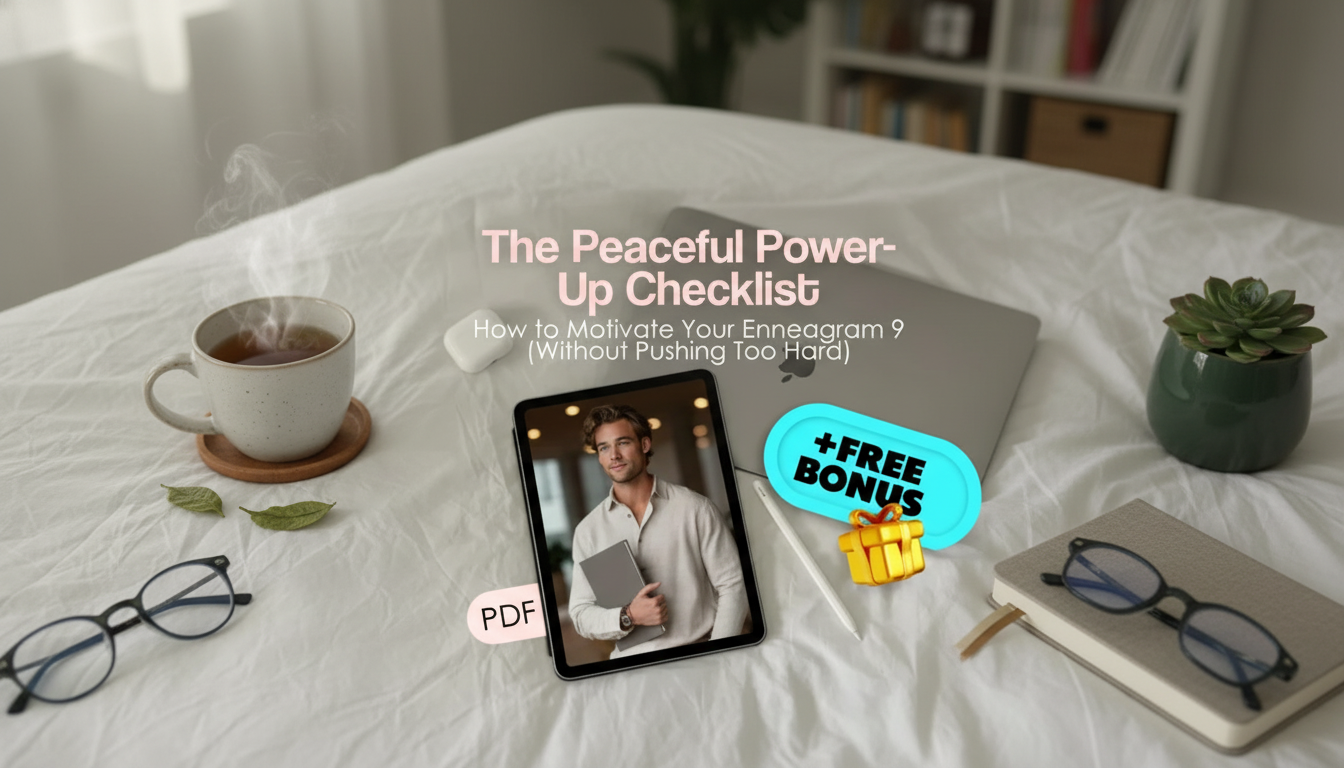
Use this as a calm “on-ramp” that keeps agency intact and reduces emotional static. If you want a ready-to-use version you can keep on your phone or print, the The Peaceful Power-Up Checklist: How to Motivate Your Enneagram 9 (Without Pushing Too Hard) (Digital Download) is built for quick re-entry on days when starting feels heavy.
1) Reconnect to desire
Name what the task protects or enables: comfort, harmony, freedom, stability, or future ease. Type 9 motivation often wakes up when the “why” feels peaceful, not performative.
2) Shrink the first step
Define a “two-minute start” that is impossible to fail. Examples: open the document, put shoes on, wash one dish, or write one sentence.
3) Create a soft container
Choose a short time block (10–25 minutes) with a gentle end point. A clear stopping place reduces the fear that the task will consume the whole day.
4) Reduce decision load
Pre-select tools, location, and materials so starting requires no extra choices. Decisions drain Type 9 energy faster than the task itself.
5) Use low-conflict cues
Pick reminders that feel friendly: a simple note, a timer tone you actually like, or a supportive text that doesn’t carry judgment.
6) Add a calming body reset
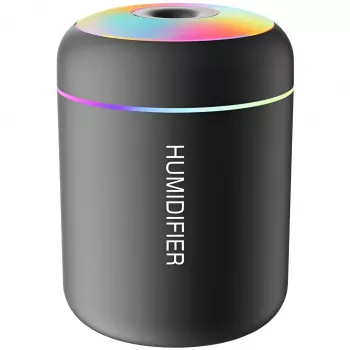
One minute of breathing, stretching, or tidying the immediate area can lower resistance. If sensory comfort helps you settle in, a gentle environment boost—like the Mini USB Aroma Humidifier & Essential Oil Diffuser with Soft LED Light—can act as a “start signal” without adding pressure.
7) Choose a single priority
Pick one target outcome for the session. Not a full life overhaul—just one clear win.
8) Close the loop
End with a micro-finish: save the file, put materials in one place, and jot the next step. Re-entry becomes easier when future-you doesn’t have to re-decide.
9) Reward stability
Choose a small, consistent reward (tea, a short walk, one song) that reinforces momentum rather than adrenaline.
Common Type 9 Roadblocks and Gentle Motivators
| Roadblock | What It Often Feels Like | Gentle Motivator to Try | Tiny Next Step |
|---|---|---|---|
| Overwhelm from too many options | “I don’t even know where to begin” | Pre-decide one path for today only | Pick one folder/one page/one shelf |
| Fear of conflict or disappointing someone | “If I choose this, someone won’t like it” | Use neutral language and boundaries | Write a 1-sentence decision statement |
| Low connection to personal priorities | “It doesn’t matter what I want” | Name one preference out loud | List 3 wants; circle 1 |
| Energy dips and procrastination loops | “I’ll start after I feel ready” | Start first; readiness follows | Two-minute setup only |
| Task feels emotionally heavy | “This will disturb my peace” | Make it safer: smaller, supported, time-limited | 10-minute timer + soothing music |
Supportive Language That Motivates Type 9 (Without Triggering Shutdown)
Words matter more than most people realize with Type 9s—because tone can feel like conflict before conflict even happens. Try:
- Invitational phrasing: “Would you be open to…?” and “What feels doable today?”
- Autonomy-first framing: “You get to choose the pace; the goal is one small step.”
- Confirming their importance: “Your priorities matter too; this is worth your time.”
- No hidden urgency: swap “You have to” for “Let’s pick a next step that keeps it simple.”
- Clear, kind accountability: agree on one check-in time and one measurable micro-goal.
Daily and Weekly Rhythms That Keep a Type 9 Moving
- Daily anchor task (10–20 minutes): one small but meaningful action that builds trust in follow-through.
- Weekly reset (15 minutes): choose the top 1–3 priorities only; shorter lists reduce the urge to disappear.
- Environment support: soften sensory stress—comfortable temperature, uncluttered surface, gentler lighting.
- Energy matching: schedule higher-friction tasks when calm energy is naturally higher (often late morning).
- Recovery protected: decompression time keeps progress from feeling like peace is being stolen.
Using the Digital Checklist Guide for Real-Life Situations
Gentle Add-Ons: Creating a Calm Start Signal
Learn More (Authoritative Resources)
- The Enneagram Institute — Type Nine in Brief
- American Psychological Association — Motivation (overview topic)
FAQ
How to motivate an Enneagram 2?
Focus on appreciation and belonging: acknowledge their care, clarify what help is actually needed, and offer a specific role with a clear finish line. Avoid guilt-based asks; use gratitude and healthy boundaries so they don’t overextend.
Recommended for you

Leather vs Nylon Cat Collars: Comfort, Fit & Safety
May 18, 2026









Leave a comment