-
Shop
- Advanced Technologies
- AI Skills Mastery 2026 Collection
- Best-Sellers
- Calvin Klein
- Car Accessories
- Car Buying & Ownership
- Dating & Social Skills
- Denim
- 7FOR
- AGOLDE
- Antony Morato
- Armani Exchange
- Boss
- Brunello Cucinelli
- Calvin Klein Jeans
- Costume National
- Desigual
- Diesel
- Dolce & Gabbana
- Dsquared²
- Ermanno Scervino
- Fendi
- Gianni Lupo
- Guess Jeans
- Ichi
- Just Cavalli
- Lee
- Levi's
- Liu Jo
- Morgan De Toi
- Mother Denim
- Only
- Pepe Jeans
- Pinko
- Replay
- Tommy Hilfiger Jeans
- Valentino
- Vero Moda
- Digital Resources
- Education & Learning
- Family & Parenting
- Fashion
- Alexander McQueen
- Bags & Wallets
- Balenciaga
- Belts
- Bottega Veneta
- Brunello Cucinelli
- Burberry
- Chanel
- Chloé
- Dior
- Dolce & Gabbana
- Etro
- Fendi
- Gucci
- Hats & Hair Accessories
- Jacquemus
- Jewelry
- Jil Sander
- Jimmy Choo
- Keychains
- Kiton
- Miu Miu
- Off-White
- Prada
- Rick Owens
- Saint Laurent
- Shoes
- Socks & Tights
- Sunglasses
- The Row
- Tom Ford
- Valentino
- Valentino Garavani
- Versace
- Vivienne Westwood
- Watches
- Fashion & Style
- Fashion Accessories
- Financial Education
- Find Your Path Collection
- Fitness
- Furniture
- Gadgets
- Health & Beauty
- Health & Wellness
- Home & Garden
- Home & Kitchen
- Home Styling & Organization
- Home Supplies
- Kids & Babies
- Kitchen
- Lighting
- Nike
- Online Business
- Online Business for Beginners
- Parenting
- Patio, Lawn & Garden
- Personal Growth
- Pet Care
- Pet Supplies
- Pets
- Smart Life with IA
- Sport & Outdoors
- Super Deals
- Travel
- Wealth
- Wealth Building
- Wellness
- YouTube Shorts Best-Sellers
- Popular
- Best deals
Keep Muscle While Cutting: Protein, Lifting & Check-Ins
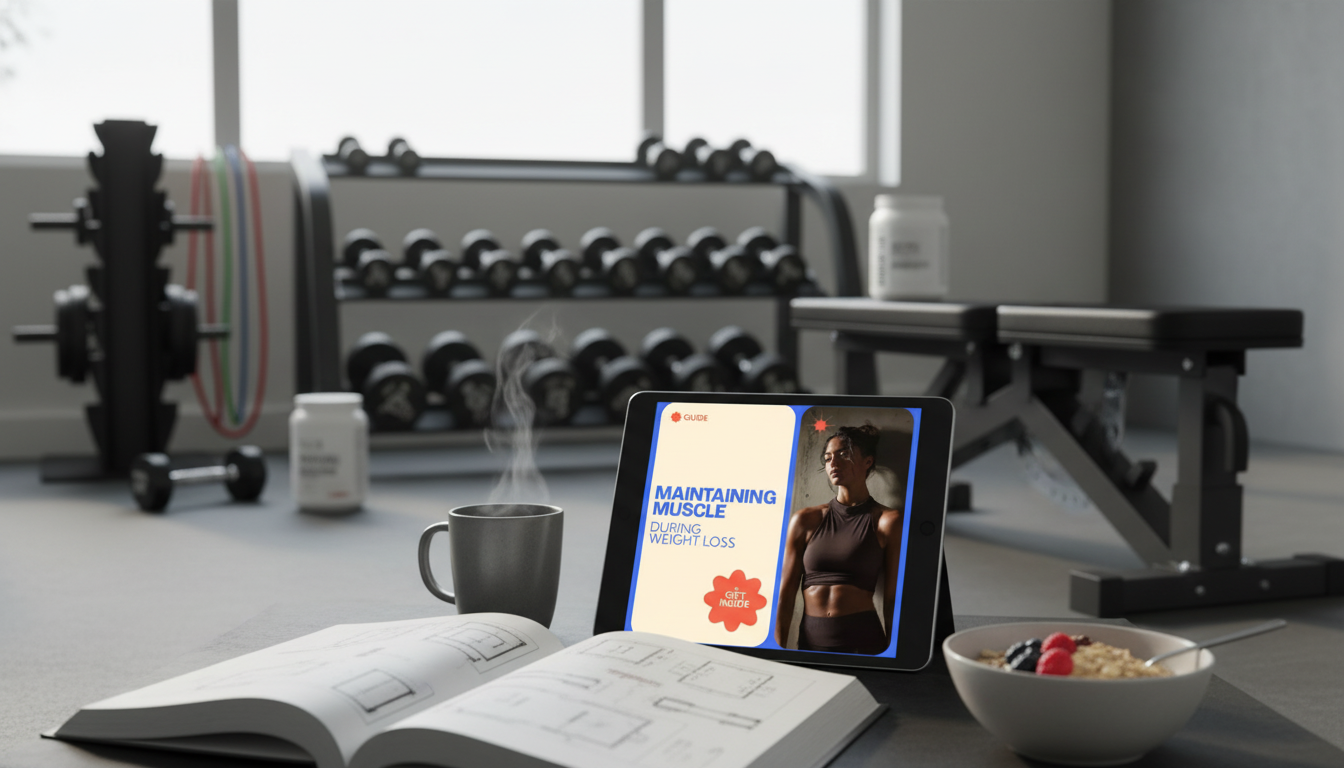
Maintaining Muscle During Weight Loss: A Science-Based Plan for Fat Loss Without Strength Loss
Losing fat without giving up hard-earned muscle comes down to a few controllable levers: the size of the calorie deficit, progressive strength training, high-quality protein, recovery, and smart adjustments when scale weight stalls. The most reliable approach prioritizes performance in the gym and adequate protein while using a moderate deficit that can be sustained long enough to reduce body fat. Below is a practical plan to protect strength while leaning out, plus a simple weekly check-in routine that keeps decisions individualized.
What “muscle loss” during dieting really means
During a cut, the scale rarely tells the whole story. Early weight drops often come from glycogen and water, not actual loss of muscle tissue. True muscle-loss risk climbs when deficits get aggressive, protein is too low, training stimulus fades, sleep tanks, and diet fatigue stacks up.
A useful reality check is strength performance: if your key lifts are stable (or only slightly down) while body weight trends down, muscle retention is usually good. A slower rate of loss isn’t “less serious”—it’s often the difference between looking leaner versus simply looking smaller.
| Signal | Most likely cause | Best first fix |
|---|---|---|
| Strength dropping week to week | Deficit too large, recovery too low, training volume too high | Reduce deficit 5–10%, add rest day, keep heavy sets |
| Scale stalled 2+ weeks | Lower NEAT, tracking errors, water retention | Audit intake, add steps, hold plan 7 days before changing |
| Constant hunger and poor sleep | Calories too low, low fiber, caffeine timing | Add volume foods, shift calories to evening, cut caffeine after noon |
| Flat workouts, low pump | Low carbs/glycogen and/or too much volume | Place carbs pre/post training, reduce junk volume |
Set a deficit that protects performance
Moderation wins for muscle retention. Many people do well aiming for about 0.5–1.0% of body weight loss per week. The leaner and more trained you are, the more you’ll benefit from the slower end to keep training quality high.
To avoid reacting to water swings, use a consistent weigh-in routine (daily morning weigh-ins are common) and track a 7-day average. If strength, mood, and sleep are crashing, treat that as feedback: the deficit is likely too aggressive, recovery is insufficient, or both.
For longer phases (often beyond 6–10 weeks), maintenance weeks or diet breaks can reduce fatigue and help you train with more output. If you want a structured system that blends training priorities with adjustment rules, consider the Maintaining Muscle During Weight Loss Guide (Strength Training, Protein & AI Strategy eBook).
Protein targets that preserve lean mass
Higher protein supports muscle protein synthesis and tends to make dieting more tolerable by improving satiety. A practical target for many is roughly 1.6–2.2 g/kg of body weight per day (the higher end can be especially helpful if you’re very lean or using a steeper deficit). For more detail, the International Society of Sports Nutrition summarizes protein guidance here: ISSN position stand: Protein and exercise.
Distribution matters. Instead of one huge serving at night, spread protein across the day (for example, 3–5 meals with a meaningful protein portion each). Prioritize complete, leucine-rich options like dairy, eggs, meat, and soy, or combine plant sources to cover amino acids.
Finally, keep the big picture: “high protein” only works if total calories still fit your deficit and you leave enough room for carbs and fats to support training, mood, and adherence.
Strength training: the muscle-retention signal
Simple weekly structure (example)
| Day | Focus | Notes |
|---|---|---|
| Day 1 | Lower body + core | One heavy hinge or squat pattern, then 2–3 accessories |
| Day 2 | Upper push/pull | Bench or overhead press + row/pull-up + arms |
| Day 3 | Rest or low-intensity cardio | Steps, easy cycling, mobility |
| Day 4 | Lower body hypertrophy | Moderate reps, controlled volume |
| Day 5 | Upper hypertrophy | Moderate reps, avoid failure on most sets |
Cardio and daily movement without interfering with lifting
When possible, separate hard cardio from lower-body lifting by scheduling it on different days or several hours apart. For broader activity guidance connected to weight management, see ACSM physical activity recommendations.
Recovery: sleep, stress, and the hidden reasons people lose muscle
An AI-style weekly check-in to personalize adjustments
| Metric | Target | Action if off-target |
|---|---|---|
| Weekly weight trend | -0.5% to -1.0% | Adjust calories/steps slightly |
| Strength on key lifts | Stable | Reduce deficit or volume |
| Protein | 1.6–2.2 g/kg | Increase lean protein servings |
| Steps | Consistent baseline | Add 1–2k/day |
| Sleep | 7–9 hrs | Earlier bedtime, caffeine cutoff |
Putting it together: a practical 14-day starter plan
Days 1–3
Days 4–7
Day 8 check-in
Days 9–14
If you want more structure for sustainable fat loss (nutrition, workouts, and lifestyle strategy), pair your plan with the Losing Body Fat Percentage eBook. For a more targeted “keep strength while cutting” system with check-in rules, use the Maintaining Muscle During Weight Loss Guide (Strength Training, Protein & AI Strategy eBook).
FAQ
How much protein is needed to avoid muscle loss while dieting?
Most people do well around 1.6–2.2 g/kg/day, with the higher end often helping when you’re leaner or dieting harder. Spread protein across the day and prioritize lean, complete sources so it fits your calorie target.
Can cardio make muscle loss worse during a cut?
It can if cardio volume or intensity is so high that it interferes with lifting performance and recovery. Keeping most cardio low intensity, prioritizing steps, and separating hard cardio from leg-focused lifting days reduces the risk.
What should be adjusted first if strength is dropping while losing weight?
First verify the deficit isn’t too large and that sleep is adequate. Next, reduce training volume slightly while keeping some heavy sets, and consider adding carbs around workouts to support performance.















Leave a comment