-
Shop
- Advanced Technologies
- AI Skills Mastery 2026 Collection
- Beauty
- Best-Sellers
- Calvin Klein
- Car Accessories
- Car Buying & Ownership
- Dating & Social Confidence
- Dating & Social Skills
- Denim
- 7FOR
- AGOLDE
- Antony Morato
- Armani Exchange
- Boss
- Brunello Cucinelli
- Calvin Klein Jeans
- Costume National
- Desigual
- Diesel
- Dolce & Gabbana
- Dsquared²
- Ermanno Scervino
- Fendi
- Gianni Lupo
- Guess Jeans
- Ichi
- Just Cavalli
- Lee
- Levi's
- Liu Jo
- Morgan De Toi
- Mother Denim
- Only
- Pepe Jeans
- Pinko
- Replay
- Tommy Hilfiger Jeans
- Valentino
- Vero Moda
- Digital Resources
- Education & Learning
- Family & Parenting
- Fashion
- Alexander McQueen
- Bags & Wallets
- Balenciaga
- Belts
- Bottega Veneta
- Brunello Cucinelli
- Burberry
- Chanel
- Chloé
- Dior
- Dolce & Gabbana
- Etro
- Fendi
- Gucci
- Hats & Hair Accessories
- Jacquemus
- Jewelry
- Jil Sander
- Jimmy Choo
- Keychains
- Kiton
- Miu Miu
- Off-White
- Prada
- Rick Owens
- Saint Laurent
- Shoes
- Socks & Tights
- Sunglasses
- The Row
- Tom Ford
- Valentino
- Valentino Garavani
- Versace
- Vivienne Westwood
- Watches
- Fashion & Style
- Fashion Accessories
- Financial Education
- Find Your Path Collection
- Fitness
- Furniture
- Gadgets
- Health & Beauty
- Health & Wellness
- Home & Garden
- Home & Kitchen
- Home Styling & Organization
- Home Supplies
- Kids & Babies
- Kitchen
- Lighting
- Nike
- Online Business
- Online Business for Beginners
- Parenting
- Patio, Lawn & Garden
- Personal Growth
- Pet Care
- Pet Supplies
- Pets
- Smart Life with IA
- Sport & Outdoors
- Super Deals
- Travel
- Wealth
- Wealth Building
- Wellness
- YouTube Shorts Best-Sellers
- Popular
- Best deals
Free Online Courses That Stick: Find, Filter, Finish Fast

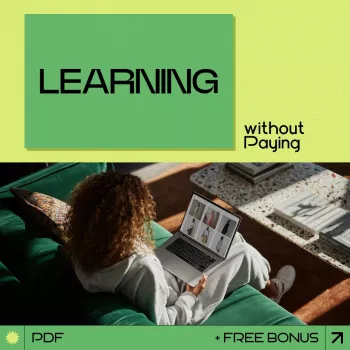
Learning Without Paying: A Practical Path to Free Online Courses and Faster Skill-Building
Free online learning is everywhere—but it’s also easy to waste hours bouncing between half-finished videos, outdated tutorials, and “free” offers that turn into upsells. The fastest path to real results is a simple system: set one clear goal, find legitimate course sources, filter for quality, follow a short plan, and finish with proof you can show. The steps below help you build skills without paying for course access—and without the common pitfalls that make free learning feel scattered.
Start With a Clear Skill Goal (So “Free” Doesn’t Become “Random”)
Before searching for anything, decide what “done” looks like. A strong goal gives you a filter so you can ignore 90% of the noise.
- Pick one outcome for the next 2–4 weeks: pass an Excel interview test, build a simple portfolio site, understand bookkeeping basics, or earn a beginner cloud badge.
- Define a success checkpoint: a shipped project, a quiz score target, a certificate (if available), or a portfolio artifact.
- Choose constraints: weekly hours, preferred format (video/text/labs), and device limitations (mobile-only or low bandwidth).
- Create a “must-learn list” (5–8 bullets): the exact subtopics you need so you don’t course-hop when content gets challenging.
A practical example: “In 14 days, build a one-page portfolio site with a contact form, deploy it, and write a short README explaining the tools used.” That’s focused, measurable, and easy to prove.
Where Free Courses Hide: The Most Reliable Types of Platforms
Not all “free” sources are equal. These categories tend to be the most dependable for legitimate, high-quality learning.
- University open courseware: full syllabi, lecture notes, and problem sets. Many don’t offer certificates, but the content quality can be outstanding (example: MIT OpenCourseWare).
- MOOCs with free auditing: many courses allow free access to lectures and readings; certificates are often optional paid add-ons (example: edX).
- Government and public library learning portals: workforce development programs or library logins that unlock paid platforms at no cost.
- Vendor academies: training from software and cloud providers; often includes labs, learning paths, and badges that serve as proof.
- Nonprofit and community programs: structured cohorts, mentorship, and career-transition curricula.
If you want a quick catalog-style view of what’s currently free across platforms, Class Central can help you compare options without starting from scratch.
Smart Search Methods That Surface Legitimate Free Learning
Search strategy matters. A few small changes can surface complete course pages, downloadable materials, and reputable instructors faster.
- Use advanced operators: try site:.edu for university materials, filetype:pdf for lecture notes, and intitle:syllabus when you want structured course outlines.
- Look for “audit free” and “financial aid”: many MOOC platforms clearly explain free-access paths—especially for viewing content without paying for credentials.
- Add constraint filters: “self-paced,” “beginner,” “with exercises,” “practice files,” “labs,” or “capstone” to avoid passive, lecture-only content.
- Check for duplication: the same course might appear on multiple hosts, and one version may include downloadable assignments or fewer restrictions.
- Validate authenticity: look for instructor credentials, clear objectives, a syllabus, and a known institution or platform.
A simple rule: if you can’t find a syllabus, a real instructor identity, or concrete learning objectives, treat it as entertainment—not training.
A Quick Quality Check Before Investing Time
Free is only a bargain if it moves you toward your goal. Spend five minutes on a quality check before committing your week.
- Look for structure: module breakdown, estimated time, prerequisites, and practice (quizzes, assignments, labs).
- Confirm currency: updated dates and current tool versions (especially in tech, analytics, and marketing platforms).
- Prefer practice artifacts: templates, datasets, prompts, case studies, or coding exercises you can reuse later.
- Scan reviews carefully: prioritize comments about clarity, workload, and real outcomes—not just “fun” or “easy.”
- Avoid red flags: vague promises, missing instructor details, upsell-heavy funnels, or “free” content that demands payment info immediately.
Compare Options Fast With a Simple Scorecard
| Course | Practice Included | Time (hrs) | Level Fit | Proof of Skill | Score (1–5) |
|---|---|---|---|---|---|
| Option A | Quizzes + project | 8 | Good | Portfolio artifact | |
| Option B | Readings only | 6 | Too easy | None | |
| Option C | Labs + assessments | 10 | Stretch | Badge or capstone |
Build a Personal Learning Plan That Finishes Strong
A Guided Shortcut: Turn the System Into a Repeatable Habit
If you want a more guided workflow for discovering reliable free platforms, using smarter search patterns, and following a personal learning plan template, Learning Without Paying: How to Find Free Courses Online eBook Guide | Discover Hidden Free Learning Platforms, Build Skills Fast, Smart Search Methods & Personal Learning Plan can serve as a structured companion when motivation is high but time is limited.
For learners building broader life skills (like communication and relationship-building), a structured guide can also help keep progress focused. If that’s your current goal, Helping Teens Build Healthy Connections in a Digital World – eBook Guide on how to help teens build healthy friendships, Teen Communication & Social Skills Resource is another option for a step-by-step approach with clear outcomes.
FAQ
Are free online courses actually worth it without a paid certificate?
Yes—when they include a structured curriculum, practice, and a concrete outcome you can show. A portfolio project, assessment results, or a documented case study often carries more weight than a generic certificate alone.
How can course quality be checked quickly before committing?
Look for a clear syllabus, instructor credibility, updated materials, and hands-on practice like quizzes, assignments, or labs. A simple scorecard comparing time, level fit, and proof of skill makes the decision faster and more objective.
What’s the fastest way to build a skill using only free resources?
Use a two-week sprint: one primary course, one project that forces application, and a daily minimum study block you can keep. Avoid juggling multiple courses at once—finishing one path with a real artifact is usually the quickest win.
Recommended for you

Clean Your Washer Drum With Vinegar: Easy Odor Fix
May 27, 2026
Stress Resets: A Quick Summary to Calm in Minutes
May 28, 2026













Leave a comment