-
Shop
- Advanced Technologies
- AI Skills Mastery 2026 Collection
- Beauty
- Best-Sellers
- Calvin Klein
- Car Accessories
- Car Buying & Ownership
- Dating & Social Confidence
- Dating & Social Skills
- Denim
- 7FOR
- AGOLDE
- Antony Morato
- Armani Exchange
- Boss
- Brunello Cucinelli
- Calvin Klein Jeans
- Costume National
- Desigual
- Diesel
- Dolce & Gabbana
- Dsquared²
- Ermanno Scervino
- Fendi
- Gianni Lupo
- Guess Jeans
- Ichi
- Just Cavalli
- Lee
- Levi's
- Liu Jo
- Morgan De Toi
- Mother Denim
- Only
- Pepe Jeans
- Pinko
- Replay
- Tommy Hilfiger Jeans
- Valentino
- Vero Moda
- Digital Resources
- Education & Learning
- Family & Parenting
- Fashion
- Alexander McQueen
- Bags & Wallets
- Balenciaga
- Belts
- Bottega Veneta
- Brunello Cucinelli
- Burberry
- Chanel
- Chloé
- Dior
- Dolce & Gabbana
- Etro
- Fendi
- Gucci
- Hats & Hair Accessories
- Jacquemus
- Jewelry
- Jil Sander
- Jimmy Choo
- Keychains
- Kiton
- Miu Miu
- Off-White
- Prada
- Rick Owens
- Saint Laurent
- Shoes
- Socks & Tights
- Sunglasses
- The Row
- Tom Ford
- Valentino
- Valentino Garavani
- Versace
- Vivienne Westwood
- Watches
- Fashion & Style
- Fashion Accessories
- Financial Education
- Find Your Path Collection
- Fitness
- Furniture
- Gadgets
- Health & Beauty
- Health & Wellness
- Home & Garden
- Home & Kitchen
- Home Styling & Organization
- Home Supplies
- Kids & Babies
- Kitchen
- Lighting
- Nike
- Online Business
- Online Business for Beginners
- Parenting
- Patio, Lawn & Garden
- Personal Growth
- Pet Care
- Pet Supplies
- Pets
- Smart Life with IA
- Sport & Outdoors
- Super Deals
- Travel
- Wealth
- Wealth Building
- Wellness
- YouTube Shorts Best-Sellers
- Popular
- Best deals
Critical Thinking eBook: Frameworks, Bias Checks & Puzzles
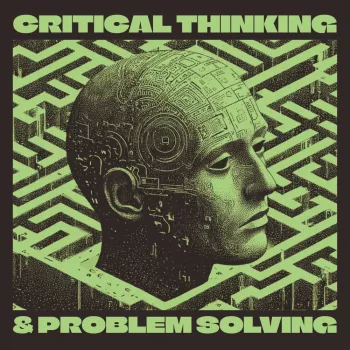
Critical Thinking & Problem Solving: Practical Skills for Better Decisions
Clear thinking is a learnable skill—and it pays off everywhere decisions happen: at work, in school, in relationships, and during stressful moments when it feels like there’s no time to slow down. The Critical Thinking & Problem Solving eBook – Digital Download Guide for Smarter Decision Making, Brain Teasers & Life Skills Ebook focuses on tools that hold up in real life: evaluating information, spotting weak reasoning, and choosing steadier actions under pressure. Guided exercises, brain teasers, and practical scenarios help turn “I’m not sure” into a repeatable process you can trust.
For readers who enjoy going deeper, reputable references like The Foundation for Critical Thinking and the APA Dictionary of Psychology entry on cognitive bias offer helpful background on how thinking can go wrong—and how structure can keep it on track.
What This eBook Helps Build
- A repeatable approach for turning messy problems into clear, solvable steps
- Stronger judgment when information is incomplete, emotional, or contradictory
- Confidence in explaining decisions and challenging assumptions respectfully
- Mental flexibility through puzzles and short drills that strengthen reasoning
The goal isn’t to “win arguments.” It’s to develop habits that reduce unforced errors—like reacting to the loudest opinion, mistaking confidence for accuracy, or committing to a plan without checking whether the assumptions are realistic.
A Simple Framework for Smarter Decisions
When life feels noisy, a framework acts like guardrails. Instead of relying on vibes, you move through checkpoints that force clarity and keep the decision tied to evidence and constraints.
- Define the problem precisely: what is happening, what is changing, and what must be decided.
- Separate facts from interpretations: list what is known, what is assumed, and what is missing.
- Generate options: include at least one “do nothing” option to reduce impulsive choices.
- Test options against constraints: time, money, risks, ethics, and long-term impact.
- Choose, act, review: document a brief rationale and check outcomes to improve future decisions.
Decision Checkpoints That Reduce Common Mistakes
| Checkpoint | What to Ask | Common Trap It Prevents |
|---|---|---|
| Clarify the goal | What does “success” look like in one sentence? | Solving the wrong problem |
| Verify evidence | What source supports this claim, and how reliable is it? | Believing the loudest or most recent information |
| List assumptions | What must be true for this plan to work? | Hidden premises that collapse the plan |
| Consider alternatives | What would someone who disagrees propose? | False dilemmas (only two options) |
| Check trade-offs | What is gained, lost, and delayed by each choice? | Short-term bias and sunk-cost thinking |
| Run a pre-mortem | If this fails, why did it fail? | Overconfidence and risk blindness |
Brain Teasers That Strengthen Real-World Reasoning
Puzzles aren’t just entertainment; they’re controlled practice. They make it easier to notice gaps, test “if/then” chains, and resist jumping to the first answer that feels right.
- Pattern and constraint puzzles to improve working memory and attention to detail
- Logic and deduction challenges that train error checking and structured reasoning
- Estimation and probability prompts to reduce overreaction to rare events
- Short reflection questions connecting puzzle habits to daily decisions (budgeting, planning, communication)
This blend matters because everyday problem solving isn’t only about being “smart.” It’s about being methodical when the situation is unclear—like comparing job offers, deciding whether a claim online is trustworthy, or troubleshooting a recurring mistake at work.
Everyday Life Skills: Thinking Clearly Under Pressure
- Handling information overload: prioritize what changes the decision versus what is noise.
- Conflict and communication: restate the other viewpoint accurately before challenging it.
- Time-sensitive choices: use a minimum viable decision—decide what can be decided now and what needs more data.
- Learning from outcomes: keep a brief decision log to spot recurring blind spots.
A simple decision log can be surprisingly powerful: write down the goal, the top assumptions, the option chosen, and what you expect to happen. Later, compare reality to the prediction. Over time, patterns show up—like consistently underestimating time, ignoring downstream costs, or assuming other people have the same priorities you do.
Common Obstacles That Make Good Thinking Hard
- Emotional reasoning: strong feelings can be useful signals, but they are not evidence.
- Confirmation bias: seeking supportive information while dismissing contradictions.
- Authority and popularity effects: confusing credentials or consensus with correctness.
- Ambiguity avoidance: rushing to certainty when waiting would improve the decision.
- Cognitive fatigue: mental tiredness increases shortcuts and reduces error detection.
One practical way to counter these obstacles is to “externalize” the thinking: write the assumptions down, list disconfirming evidence on purpose, and run a quick pre-mortem to surface risks you’d rather not think about. Structure makes it easier to be honest, especially when pride or pressure is involved.
Who This Digital Download Fits Best
Recommended Picks Available Now
- Critical Thinking & Problem Solving eBook – Digital Download Guide for Smarter Decision Making, Brain Teasers & Life Skills Ebook ($27.99)
- Mini USB Aroma Humidifier & Essential Oil Diffuser with Soft LED Light ($5.01)
Critical Thinking & Problem Solving eBook: What You Get
- Digital download format for quick access on common devices
- Guided methods for evaluating claims, mapping problems, and choosing among options
- Brain teaser-style exercises designed to build transferable reasoning habits
- A practical tone focused on decisions, not jargon
- Product page for details and download: Critical Thinking & Problem Solving eBook – Digital Download Guide for Smarter Decision Making, Brain Teasers & Life Skills Ebook
FAQ
What are the problems with critical thinking?
Critical thinking often breaks down because of bias, emotion, poor-quality information, time pressure, overconfidence, and mental fatigue. Using structured steps—like clarifying goals, checking evidence, listing assumptions, and running a pre-mortem—reduces these failures by forcing specific checks instead of relying on gut reactions.
What are the 7 critical thinking skills?
A widely used set includes interpretation (understanding meaning), analysis (breaking ideas into parts), evaluation (judging credibility), inference (drawing careful conclusions), explanation (clearly stating reasons), self-regulation (monitoring and correcting your thinking), and open-mindedness (actively considering alternatives and counterevidence).















Leave a comment