-
Shop
- Advanced Technologies
- AI Skills Mastery 2026 Collection
- Best-Sellers
- Calvin Klein
- Car Accessories
- Car Buying & Ownership
- Dating & Social Skills
- Denim
- 7FOR
- AGOLDE
- Antony Morato
- Armani Exchange
- Boss
- Brunello Cucinelli
- Calvin Klein Jeans
- Costume National
- Desigual
- Diesel
- Dolce & Gabbana
- Dsquared²
- Ermanno Scervino
- Fendi
- Gianni Lupo
- Guess Jeans
- Ichi
- Just Cavalli
- Lee
- Levi's
- Liu Jo
- Morgan De Toi
- Mother Denim
- Only
- Pepe Jeans
- Pinko
- Replay
- Tommy Hilfiger Jeans
- Valentino
- Vero Moda
- Digital Resources
- Education & Learning
- Family & Parenting
- Fashion
- Alexander McQueen
- Bags & Wallets
- Balenciaga
- Belts
- Bottega Veneta
- Brunello Cucinelli
- Burberry
- Chanel
- Chloé
- Dior
- Dolce & Gabbana
- Etro
- Fendi
- Gucci
- Hats & Hair Accessories
- Jacquemus
- Jewelry
- Jil Sander
- Jimmy Choo
- Keychains
- Kiton
- Miu Miu
- Off-White
- Prada
- Rick Owens
- Saint Laurent
- Shoes
- Socks & Tights
- Sunglasses
- The Row
- Tom Ford
- Valentino
- Valentino Garavani
- Versace
- Vivienne Westwood
- Watches
- Fashion & Style
- Fashion Accessories
- Financial Education
- Find Your Path Collection
- Fitness
- Furniture
- Gadgets
- Health & Beauty
- Health & Wellness
- Home & Garden
- Home & Kitchen
- Home Styling & Organization
- Home Supplies
- Kids & Babies
- Kitchen
- Lighting
- Nike
- Online Business
- Online Business for Beginners
- Parenting
- Patio, Lawn & Garden
- Personal Growth
- Pet Care
- Pet Supplies
- Pets
- Smart Life with IA
- Sport & Outdoors
- Super Deals
- Travel
- Wealth
- Wealth Building
- Wellness
- YouTube Shorts Best-Sellers
- Popular
- Best deals
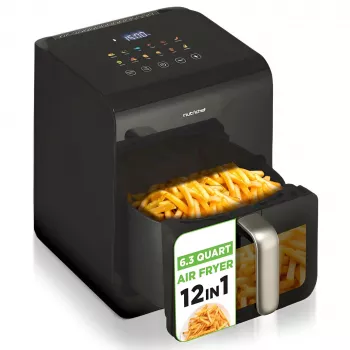
6.3 QT Digital Air Fryer: 12 Presets + Tenderizing
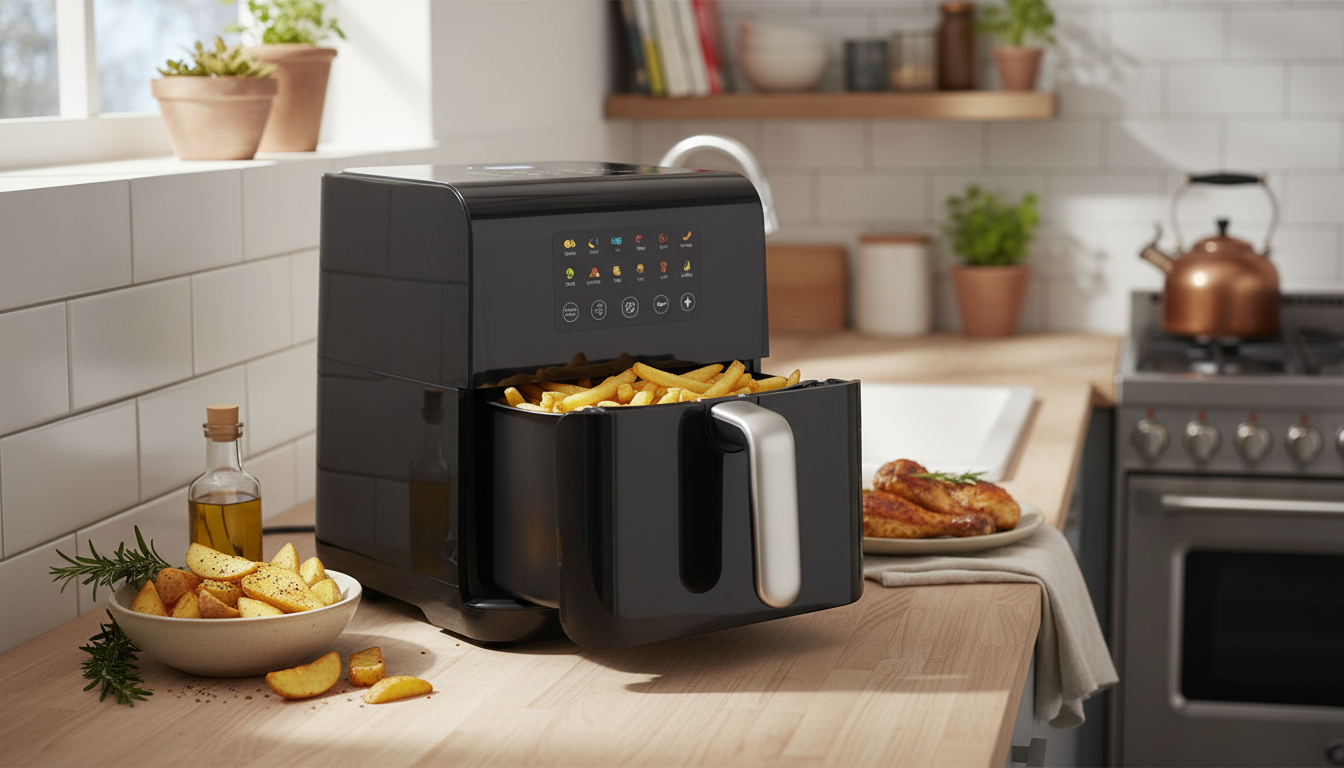
6.3 QT Digital Air Fryer with 12-in-1 Presets & Tenderizing Function: Faster Weeknight Meals with Crispy Results
A 6.3-quart digital air fryer with one-touch presets is built for busy kitchens that want crunchy edges, reliable timing, and less oil than traditional frying. The 12-in-1 preset system helps simplify everyday decisions (time, temperature, and mode), while a tenderizing function is aimed at proteins that can turn dry when exposed to fast, circulating heat. Below is a practical guide to what those features do, who a 6.3 QT basket fits best, and how to get consistent results without overcooking.
What makes this 6.3 QT digital air fryer different
A bigger basket and smarter controls change the experience more than most people expect. A 6.3 QT size is large enough for family portions and “one-and-done” sides without constantly refilling the basket. With digital controls, settings are easier to repeat—helpful when a household has a few go-to dinners that need to come out the same way every time.
- 6.3 QT basket size suits family portions and single-batch sides without constant refills.
- 12-in-1 presets reduce guesswork for common foods where timing is usually the hardest part.
- Tenderizing function targets proteins that can dry out quickly under high-heat convection-style airflow.
- Digital controls support repeatable outcomes with fewer manual tweaks.
- Useful for crisping, reheating, and quick roasting when turning on (and waiting for) the oven feels like too much.
Capacity and footprint: who 6.3 QT is best for
Basket capacity matters most when it reduces batch cooking. A 6.3 QT air fryer is typically a strong fit for 2–5 people depending on what you’re making and how many components are on the plate.
- Best fit for 2–5 people depending on meal style (single main vs. main + multiple sides).
- Handles common family favorites like a batch of wings, several portions of fries, or multiple servings of vegetables.
- Supports meal prep by letting you cook proteins, then vegetables, without a small-basket bottleneck.
- If counter space is tight, plan a dedicated spot and leave airflow clearance around the unit during use.
One practical note: volume alone doesn’t guarantee crisp results. If food is piled too high, hot air can’t circulate, and you’ll get softer textures. When the basket is crowded, it’s usually better to cook in two rounds than to force everything into one load.
How the 12-in-1 presets help in real cooking
Presets work best as reliable starting points. They’re designed around common textures—crispy fries, browned wings, flaky fish—so you spend less time dialing in settings. Most foods still benefit from a shake or flip halfway through, especially smaller pieces and breaded items.
- Presets reduce manual adjustments for everyday foods.
- Mid-cook shaking/flipping improves even browning.
- Fine-tune time by 1–3 minutes based on thickness, moisture, and frozen vs. fresh.
- Don’t overfill; airflow is the engine behind crisping.
Preset cheat sheet: what to use each mode for
| Preset / Mode | Best for | Practical tip |
|---|---|---|
| Fries | Frozen or fresh fries, wedges | Shake halfway; cook in a single layer for best crisping |
| Wings / Chicken | Wings, drumsticks, tenders | Pat dry; flip once for even browning |
| Steak / Beef | Steak bites, thin cuts | Preheat briefly; rest meat after cooking |
| Fish / Seafood | Fillets, shrimp | Light oil spray helps color; avoid overcrowding |
| Vegetables | Broccoli, Brussels sprouts, mixed veg | Cut evenly; toss with a small amount of oil and seasoning |
| Reheat | Pizza slices, leftovers | Use lower time first; add minutes as needed to prevent drying |
| Bake / Dessert | Muffins, small pastries | Use oven-safe pan or silicone molds sized to the basket |
| Dehydrate / Dry | Fruit slices, herbs (if available) | Slice uniformly; rotate trays/batches for even drying |
| Roast | Potatoes, carrots, quick roast meals | Preheat for better browning on dense vegetables |
| Keep Warm | Holding finished food | Keep short; prolonged warming can soften crisp surfaces |
| Manual / Custom | Anything unusual | Start slightly lower, then increase time/heat if needed |
| Tenderizing Function | Chicken breast, lean pork, certain tougher cuts | Pair with a brief marinate or dry brine for best texture |
Tenderizing function: what it’s for and when to use it
For safe temperature targets, reference the USDA’s minimum internal temperature guidance: USDA Food Safety and Inspection Service: Minimum Internal Temperature Chart.
Getting crisp results without drying food out
Cleaning and everyday maintenance
Safety and food-handling reminders
Additional safe-handling guidance: CDC: Preventing Foodborne Germs.
Is this air fryer a good fit for your kitchen?
Recommended in-stock picks
- 6.3 QT Digital Air Fryer with 12-in-1 Presets & Tenderizing Function — a practical option for faster dinners, crisp reheats, and preset-driven cooking.
- Losing Body Fat Percentage eBook — a structured guide to nutrition, workouts, and lifestyle strategies that can complement a lighter home-cooking routine.
FAQ
What does the tenderizing function do on a digital air fryer?
It’s a cooking mode intended to help proteins come out less dry and less tough under fast, circulating heat. It works best with evenly thick cuts, solid seasoning (or a short dry brine), and pulling the food right at the correct internal temperature.
Is 6.3 QT big enough for a family meal?
For many households, yes—6.3 QT typically fits meals for about 2–5 people depending on portion size and whether you’re cooking a main plus sides. Airflow matters as much as raw capacity, so crowded foods may still need to be cooked in batches for the crispiest finish.
Do air fryers need oil to get food crispy?
Many foods crisp up with little or no oil, especially frozen items that already contain some oil. A light spray often improves browning and crunch, but too much oil (or an overfilled basket) can make results greasy or soft.














Leave a comment