-
Shop
- Advanced Technologies
- AI Skills Mastery 2026 Collection
- Beauty
- Best-Sellers
- Calvin Klein
- Car Accessories
- Car Buying & Ownership
- Dating & Social Confidence
- Dating & Social Skills
- Denim
- 7FOR
- AGOLDE
- Antony Morato
- Armani Exchange
- Boss
- Brunello Cucinelli
- Calvin Klein Jeans
- Costume National
- Desigual
- Diesel
- Dolce & Gabbana
- Dsquared²
- Ermanno Scervino
- Fendi
- Gianni Lupo
- Guess Jeans
- Ichi
- Just Cavalli
- Lee
- Levi's
- Liu Jo
- Morgan De Toi
- Mother Denim
- Only
- Pepe Jeans
- Pinko
- Replay
- Tommy Hilfiger Jeans
- Valentino
- Vero Moda
- Digital Resources
- Education & Learning
- Family & Parenting
- Fashion
- Alexander McQueen
- Bags & Wallets
- Balenciaga
- Belts
- Bottega Veneta
- Brunello Cucinelli
- Burberry
- Chanel
- Chloé
- Dior
- Dolce & Gabbana
- Etro
- Fendi
- Gucci
- Hats & Hair Accessories
- Jacquemus
- Jewelry
- Jil Sander
- Jimmy Choo
- Keychains
- Kiton
- Miu Miu
- Off-White
- Prada
- Rick Owens
- Saint Laurent
- Shoes
- Socks & Tights
- Sunglasses
- The Row
- Tom Ford
- Valentino
- Valentino Garavani
- Versace
- Vivienne Westwood
- Watches
- Fashion & Style
- Fashion Accessories
- Financial Education
- Find Your Path Collection
- Fitness
- Furniture
- Gadgets
- Health & Beauty
- Health & Wellness
- Home & Garden
- Home & Kitchen
- Home Styling & Organization
- Home Supplies
- Kids & Babies
- Kitchen
- Lighting
- Nike
- Online Business
- Online Business for Beginners
- Parenting
- Patio, Lawn & Garden
- Personal Growth
- Pet Care
- Pet Supplies
- Pets
- Smart Life with IA
- Sport & Outdoors
- Super Deals
- Travel
- Wealth
- Wealth Building
- Wellness
- YouTube Shorts Best-Sellers
- Popular
- Best deals
Dry, Damaged Hair Ingredient Checklist for Repair & Softness
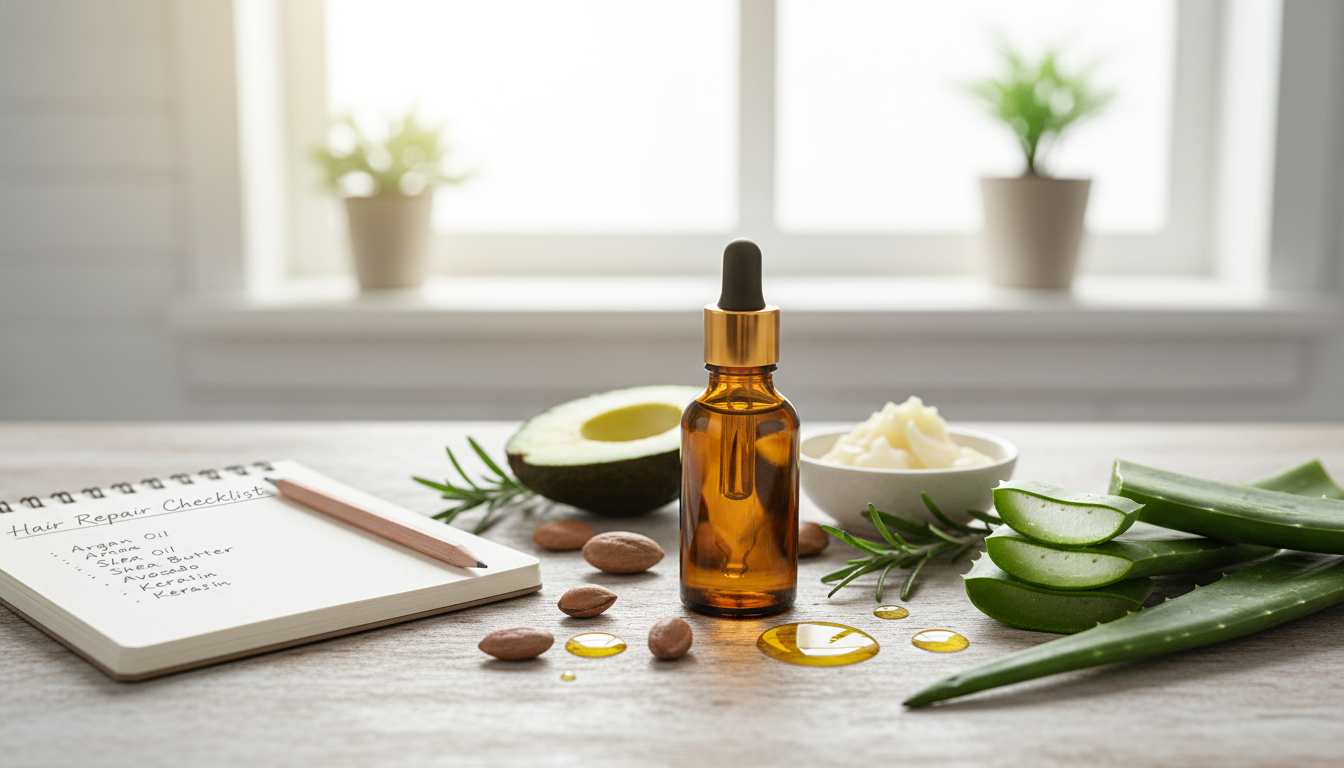
Your Go-To Ingredients for Dry, Damaged Hair: A Practical Ingredient Checklist for Softer, Stronger Strands
Dry, damaged hair usually needs two things at once: moisture (to reduce brittleness and roughness) and repair support (to reinforce weakened hair fiber and reduce breakage). The fastest way to get consistent results is to shop by ingredient families—so you can mix and match products without guessing. Below is a practical ingredient breakdown, who each group tends to help most, how to spot them on labels, and a simple routine framework to keep wash day predictable.
Quick signs hair needs moisture, repair, or both
Most hair problems are a “signal,” not a mystery. Use these quick checkpoints to decide whether to lean moisture-heavy, strengthening-focused, or balanced.
- Moisture-lacking hair: rough feel, dullness, tangles easily, frizz that returns quickly after styling.
- Protein/structure-lacking hair: snapping and breakage, limp strands, ends that “shred,” poor curl/shape retention.
- Porosity clues: high-porosity hair tends to absorb quickly but lose moisture fast; low-porosity hair can feel coated or take longer to wet.
- Chemical/heat damage indicators: increased split ends, uneven texture, frequent knots, and reduced elasticity.
If dryness and breakage show up together (common after highlights, relaxing, frequent flat ironing, or aggressive brushing), aim for moisture every wash and targeted strengthening on a schedule.
The ingredient families that matter most (and what they actually do)
Hair products can look different on the shelf, but formulas typically rely on the same handful of functional ingredient groups. Knowing what each one does makes label-reading much easier.
- Humectants (water binders): help attract and hold water in the hair. Great for dehydration, but often perform best when paired with emollients/occlusives so moisture doesn’t evaporate quickly.
- Emollients (softeners): smooth the cuticle, improve slip, detangling, and shine. These are the “softness and glide” workhorses for rough, tangled hair.
- Occlusives (sealants): create a lightweight barrier to slow moisture loss. Especially useful on very dry, high-porosity ends or in harsh weather.
- Proteins and bond-support ingredients: temporarily reinforce weakened areas and reduce breakage. Balance matters—too much can feel stiff, too little can feel mushy or fragile.
- Conditioning agents (cationic conditioners): reduce static, improve manageability, and help conditioning ingredients deposit evenly where hair is most damaged.
For additional hair-care guidance and damage-prevention habits (like gentle detangling and smart heat use), see the American Academy of Dermatology Association hair care tips and the Cleveland Clinic overview on hair breakage.
Ingredient checklist: what to look for on labels
Use this as a “scan list” while shopping. You don’t need every item—just enough coverage to match your hair’s current needs.
| Ingredient family | Common examples on labels | Best for | Where to use |
|---|---|---|---|
| Humectants | Glycerin, panthenol, sodium PCA, betaine | Dehydration, frizz from dryness | Conditioner, leave-in, some masks |
| Emollients | Cetyl/cetearyl alcohol, argan/jojoba oil, esters | Rough texture, tangles, dullness | Conditioner, mask, leave-in |
| Occlusives / sealants | Dimethicone, amodimethicone, butters, waxes | High-porosity ends, moisture loss | Leave-in, serum, end cream |
| Proteins / amino acids | Hydrolyzed keratin, silk/wheat protein, amino acids | Breakage, weak or overly soft strands | Mask or conditioner (1–4x/month as needed) |
| Cationic conditioners | Behentrimonium chloride, cetrimonium chloride, polyquaterniums | Slip, detangling, manageability | Conditioner, mask, some leave-ins |
Quick label-recognition list
- Humectants to recognize: glycerin, propanediol, panthenol, sodium PCA, betaine, hyaluronic acid, aloe (varies by formula).
- Emollients to recognize: fatty alcohols (cetyl alcohol, cetearyl alcohol), plant oils (argan, jojoba, olive, avocado), esters (isopropyl myristate).
- Occlusives to recognize: dimethicone/amodimethicone, petrolatum (more common in scalp/edge products), mineral oil, certain waxes and butters (shea butter, cocoa butter).
- Proteins to recognize: hydrolyzed keratin, hydrolyzed wheat/silk/collagen proteins, amino acids (arginine, serine), peptide blends.
- Bond/repair-support examples (product-dependent): maleate-based systems, citric-acid-based strengthening systems, bis-aminopropyl diglycol dimaleate (when present).
- Conditioning agents: behentrimonium chloride, cetrimonium chloride, polyquaterniums—often key for slip on damaged hair.
- Soothing/scalp-friendly extras (optional): allantoin, niacinamide, bisabolol—helpful if dryness includes scalp discomfort.
When evaluating ingredients and general cosmetic safety basics, the FDA’s cosmetics ingredients and safety resource is a useful reference for how cosmetic products are regulated and labeled.
How to build a simple routine using the checklist
Common ingredient mismatches (and easy fixes)
Printable checklist for faster shopping and wash-day planning
Helpful downloads (in stock)
- Your Go-To Ingredients for Dry, Damaged Hair – Ultimate Checklist of Ingredients for Dry Damaged Hair, Hair Repair Guide, Healthy Hair Care Digital Download
- Losing Body Fat Percentage eBook | Complete Guide on how to lose body fat percentage, Nutrition, Workouts & Lifestyle Strategies for Sustainable Fat Loss
FAQ
How often should protein treatments be used on damaged hair?
Most routines do best with protein treatments about every 2–4 weeks, then adjusting based on results. If hair starts feeling stiff, scale back; if breakage continues and hair feels overly soft, increase slightly. Hydrolyzed proteins in everyday conditioners are usually gentler than intensive treatments.
Are silicones bad for dry, damaged hair?
Silicones aren’t automatically bad—many (like dimethicone or amodimethicone) reduce friction, boost slip, and help protect fragile ends. If hair starts to feel coated or dull, occasional clarifying can remove buildup so conditioning ingredients keep depositing evenly.
What ingredients help with frizz caused by dryness?
Pair humectants (like glycerin or panthenol) with emollients (fatty alcohols, oils) and a light sealant to slow moisture loss. Cationic conditioners (like behentrimonium chloride) also help smooth and detangle, which reduces frizz from mechanical damage.
Recommended for you

Are Calfskin Wallets Good? Durability, Feel & Care
May 27, 2026











Leave a comment