-
Shop
- Advanced Technologies
- AI Skills Mastery 2026 Collection
- Beauty
- Best-Sellers
- Calvin Klein
- Car Accessories
- Car Buying & Ownership
- Dating & Social Confidence
- Dating & Social Skills
- Denim
- 7FOR
- AGOLDE
- Antony Morato
- Armani Exchange
- Boss
- Brunello Cucinelli
- Calvin Klein Jeans
- Costume National
- Desigual
- Diesel
- Dolce & Gabbana
- Dsquared²
- Ermanno Scervino
- Fendi
- Gianni Lupo
- Guess Jeans
- Ichi
- Just Cavalli
- Lee
- Levi's
- Liu Jo
- Morgan De Toi
- Mother Denim
- Only
- Pepe Jeans
- Pinko
- Replay
- Tommy Hilfiger Jeans
- Valentino
- Vero Moda
- Digital Resources
- Education & Learning
- Family & Parenting
- Fashion
- Alexander McQueen
- Bags & Wallets
- Balenciaga
- Belts
- Bottega Veneta
- Brunello Cucinelli
- Burberry
- Chanel
- Chloé
- Dior
- Dolce & Gabbana
- Etro
- Fendi
- Gucci
- Hats & Hair Accessories
- Jacquemus
- Jewelry
- Jil Sander
- Jimmy Choo
- Keychains
- Kiton
- Miu Miu
- Off-White
- Prada
- Rick Owens
- Saint Laurent
- Shoes
- Socks & Tights
- Sunglasses
- The Row
- Tom Ford
- Valentino
- Valentino Garavani
- Versace
- Vivienne Westwood
- Watches
- Fashion & Style
- Fashion Accessories
- Financial Education
- Find Your Path Collection
- Fitness
- Furniture
- Gadgets
- Health & Beauty
- Health & Wellness
- Home & Garden
- Home & Kitchen
- Home Styling & Organization
- Home Supplies
- Kids & Babies
- Kitchen
- Lighting
- Nike
- Online Business
- Online Business for Beginners
- Parenting
- Patio, Lawn & Garden
- Personal Growth
- Pet Care
- Pet Supplies
- Pets
- Smart Life with IA
- Sport & Outdoors
- Super Deals
- Travel
- Wealth
- Wealth Building
- Wellness
- YouTube Shorts Best-Sellers
- Popular
- Best deals
AI Research Checklist: Fact-Check Answers With Sources

Fact-Checked Answers Made Easier With a Simple AI Research Checklist
Getting reliable answers from an AI tool often depends on the instructions and verification steps used. A short, repeatable checklist makes it easier to reduce common errors, request sources clearly, and double-check claims before they get reused in work, school, content, or decision-making. The goal isn’t to slow you down—it’s to add just enough structure that important details (dates, definitions, and evidence) don’t slip through.
Why AI Answers Go Wrong (Even When They Sound Confident)
Polished language can feel like certainty, even when the underlying claim is shaky. Most “wrong but confident” outputs come from a few predictable gaps that a checklist can catch early.
- Fluent wording can mask uncertainty, missing context, or unsupported claims.
- Vague requests tend to produce broad generalizations instead of verifiable details.
- No constraints on time, location, or definitions can lead to mismatched facts (true in one place, false in another).
- Unclear citation expectations often produce unverifiable statements—or references that don’t actually exist.
- Skipping cross-checks increases the chance of carrying errors into final output and repeating them later.
These failure modes matter more when the stakes rise: health choices, legal or compliance questions, financial decisions, or anything that will be published or shared widely.
A Simple Workflow for More Reliable Research
A good workflow reduces guesswork by forcing clarity upfront and verification at the end. The steps below are quick when repeated—and they scale up when you need more rigor.
- Start with a clear goal and scope: specify the topic, timeframe, geography, and who the answer is for.
- Ask for definitions first: confirm what key terms mean in the relevant domain so the response doesn’t drift.
- Require evidence: prefer primary sources (standards bodies, official statistics, original papers). Use reputable secondary sources when needed.
- Request uncertainty handling: ask for confidence notes, assumptions, and plausible alternatives.
- Validate manually: compare multiple sources, open original documents, and confirm dates, units, and math.
- Document as you go: keep a short record of sources, quotes, and links so you can re-check later.
For broader guidance on trustworthy AI use and risk reduction practices, see NIST’s AI Risk Management Framework (AI RMF 1.0) and the OECD AI Principles.
Checklist Snapshot: From Question to Verified Output
Use this as a quick reference before accepting any claim as true. Adjust the rigor based on impact: casual curiosity can be lighter; professional, financial, or safety-sensitive use should be stricter.
Quick Checklist for More Trustworthy AI-Assisted Research
| Step | What to request from the AI tool | What to verify manually |
|---|---|---|
| Define scope | Ask for the exact definition of key terms and the assumed context | Confirm definitions match the intended use and domain |
| Demand sources | Ask for sources with direct links and publication dates | Open links, verify they exist, and check author/publisher credibility |
| Extract claims | Ask for a bullet list of factual claims and supporting citations | Cross-check each claim against at least one independent source |
| Check numbers | Ask for units, calculations, and where the numbers come from | Recalculate or confirm against the original dataset/report |
| Handle uncertainty | Ask for assumptions, limitations, and what would change the conclusion | Assess whether the uncertainty is acceptable for the decision |
| Finalize | Ask for a concise summary plus a traceable reference list | Save citations and notes for future review or audits |
Turning Vague Requests Into Verifiable Instructions
Small changes in how a question is framed can dramatically improve traceability. The key is to constrain the response so it can be checked.
- Constrain the question: include timeframe, region, and decision criteria (what counts as “best,” “safe,” “common,” or “effective”).
- Specify the output format: request (1) a claim list, (2) a source list, and (3) a brief rationale per claim.
- Ask for exact quotes: when referencing a document, request quoted text plus the page, section, or table name.
- Set source-quality rules: prioritize government publications, peer-reviewed journals, standards bodies, and established reference works.
- Add a stop condition: if sources can’t be provided, the tool should say it cannot verify rather than guessing.
When you need speed, the stop condition is especially helpful: it prevents “fill in the blank” answers that sound plausible but aren’t supported.
Common Failure Patterns and How the Checklist Helps
Most errors cluster into repeatable patterns. A checklist doesn’t eliminate mistakes automatically, but it makes them easier to spot before they spread.
- Invented references: reduced by requiring working links and then manually opening each source.
- Outdated information: reduced by demanding publication dates and setting a recency cutoff when relevant.
- Misleading summaries: reduced by extracting specific claims first, then verifying them individually.
- Cherry-picked evidence: reduced by requesting counterarguments, limitations, and alternative sources.
- Metric confusion: reduced by checking units and calculations (percent vs. percentage points, currency conversions, time ranges, and denominators).
Even a quick “numbers and dates” pass catches a surprising amount—especially when multiple sources report similar topics with different definitions.
What’s Included in the Digital Checklist
A compact digital checklist can make the workflow repeatable so you don’t have to reinvent a verification routine every time.
Helpful Picks (In Stock)
- Fact-Perfect Prompts Made Simple | AI Prompts for Accurate Facts | Digital Checklist for Reliable Research and Information
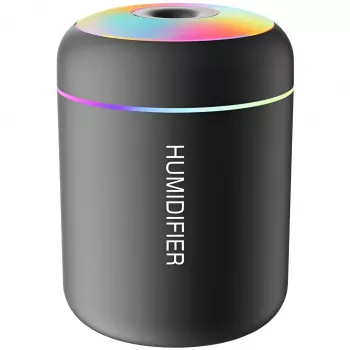
- Mini USB Aroma Humidifier & Essential Oil Diffuser with Soft LED Light
- 18K Rose Gold Moissanite Ring 0.3ct Square Diamond
FAQ
How to write AI prompts for research?
Define the scope (topic, timeframe, geography), request a claim list with citations, and require direct links plus publication dates. When possible, prioritize primary sources and ask for an assumptions/uncertainty section with a clear stop condition if sources can’t be provided.
What is the difference between good and bad prompts in AI?
Good instructions are specific, constrained, and evidence-driven, with clear definitions, required sources, and a structured output format. Bad instructions are vague, encourage unsupported assertions, and omit verification requirements like links, dates, and claim-by-claim citations.














Leave a comment