-
Shop
- Advanced Technologies
- AI Skills Mastery 2026 Collection
- Beauty
- Best-Sellers
- Calvin Klein
- Car Accessories
- Car Buying & Ownership
- Dating & Social Confidence
- Dating & Social Skills
- Denim
- 7FOR
- AGOLDE
- Antony Morato
- Armani Exchange
- Boss
- Brunello Cucinelli
- Calvin Klein Jeans
- Costume National
- Desigual
- Diesel
- Dolce & Gabbana
- Dsquared²
- Ermanno Scervino
- Fendi
- Gianni Lupo
- Guess Jeans
- Ichi
- Just Cavalli
- Lee
- Levi's
- Liu Jo
- Morgan De Toi
- Mother Denim
- Only
- Pepe Jeans
- Pinko
- Replay
- Tommy Hilfiger Jeans
- Valentino
- Vero Moda
- Digital Resources
- Education & Learning
- Family & Parenting
- Fashion
- Alexander McQueen
- Bags & Wallets
- Balenciaga
- Belts
- Bottega Veneta
- Brunello Cucinelli
- Burberry
- Chanel
- Chloé
- Dior
- Dolce & Gabbana
- Etro
- Fendi
- Gucci
- Hats & Hair Accessories
- Jacquemus
- Jewelry
- Jil Sander
- Jimmy Choo
- Keychains
- Kiton
- Miu Miu
- Off-White
- Prada
- Rick Owens
- Saint Laurent
- Shoes
- Socks & Tights
- Sunglasses
- The Row
- Tom Ford
- Valentino
- Valentino Garavani
- Versace
- Vivienne Westwood
- Watches
- Fashion & Style
- Fashion Accessories
- Financial Education
- Find Your Path Collection
- Fitness
- Furniture
- Gadgets
- Health & Beauty
- Health & Wellness
- Home & Garden
- Home & Kitchen
- Home Styling & Organization
- Home Supplies
- Kids & Babies
- Kitchen
- Lighting
- Nike
- Online Business
- Online Business for Beginners
- Parenting
- Patio, Lawn & Garden
- Personal Growth
- Pet Care
- Pet Supplies
- Pets
- Smart Life with IA
- Sport & Outdoors
- Super Deals
- Travel
- Wealth
- Wealth Building
- Wellness
- YouTube Shorts Best-Sellers
- Popular
- Best deals
Marble Runs and Physics: Gravity, Energy, and Motion
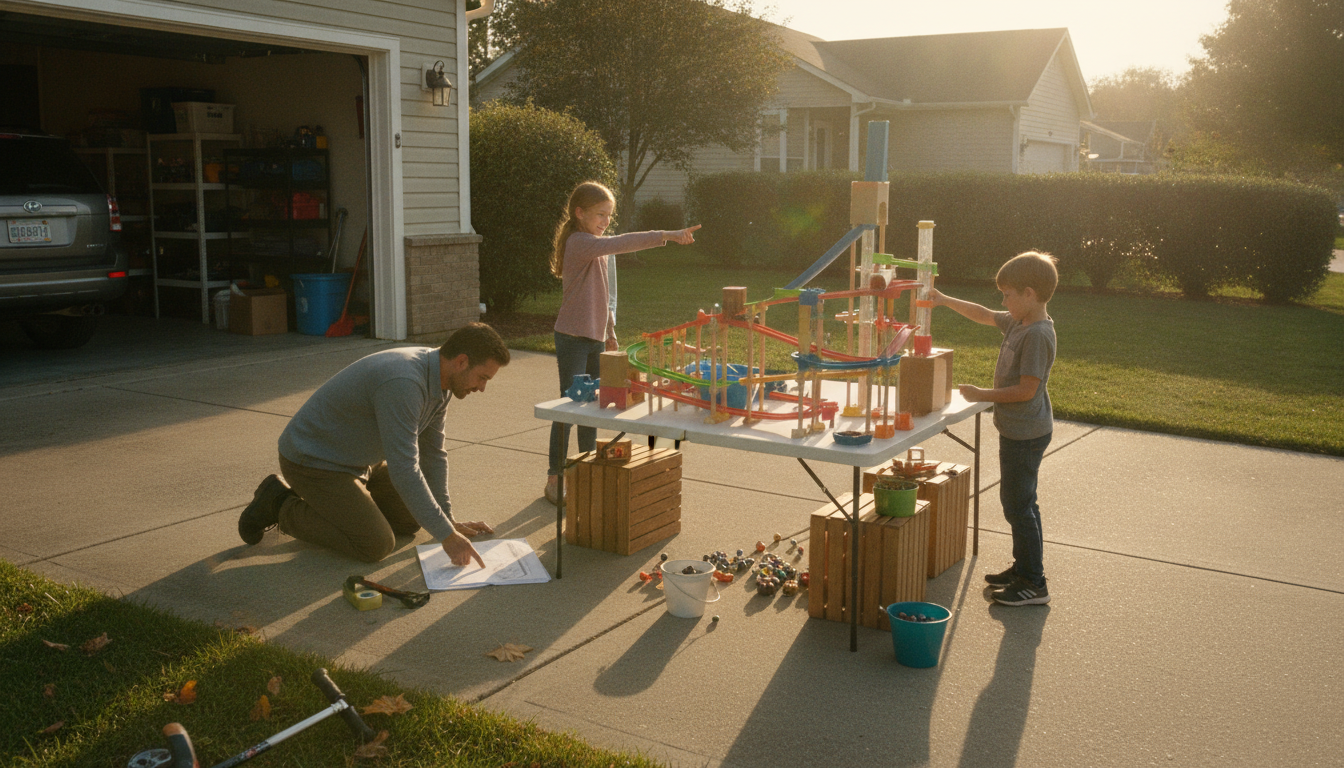
Can marble runs teach physics?
Yes—marble runs can teach real physics in a hands-on, easy-to-see way. Every time a marble starts at the top, speeds up, turns a corner, or lands in a catcher, it’s demonstrating how forces and energy work. Because the results are immediate (the marble either makes it or it doesn’t), marble runs naturally encourage testing, adjusting, and learning through repeatable experiments.
What physics concepts show up in a marble run?
A well-designed marble run can illustrate multiple core ideas:
- Gravity and acceleration: The marble accelerates downhill, showing how slope affects speed.
- Potential vs. kinetic energy: Height at the start becomes motion on the track; higher starts generally create faster runs.
- Friction and rolling resistance: Rough surfaces, tight turns, or misaligned parts slow the marble, turning energy into heat and sound.
- Momentum and collisions: Gates, bumpers, and switches show how moving objects transfer motion and change direction.
- Centripetal force (curves/loops): Banked turns and circular sections reveal why speed matters for staying on track.
Why marble runs work especially well for learning
Physics can feel abstract on paper, but marble runs turn it into something you can see and measure. Small changes—raising one support, widening a turn, adding a ramp—create noticeable differences. That makes it easier to form a hypothesis (“If I increase the drop, the marble will clear the gap”), test it, and refine the build.
Try simple experiments at home
To make the learning more explicit, try these quick challenges:
- Height test: Start from two different elevations and time each run with a phone stopwatch.
- Surface test: Run the same path with smoother vs. rougher sections and compare consistency.
- Turn test: Adjust a curve’s angle or radius to reduce derailments and increase speed.
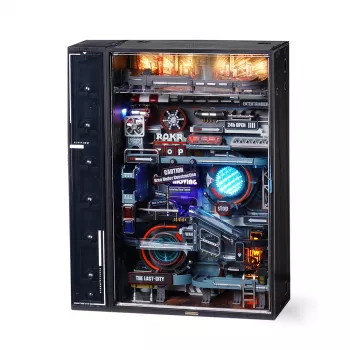
For design ideas and inspiration—especially if you like display-worthy builds—see the guide here: https://luxian.shop/guide-futuristic-marble-run-puzzle-build-tune-display/.
FAQ
How do you make a marble run more challenging?
Add tighter curves, longer sequences of switches, and smaller landing zones, then tune the height and alignment so the marble completes the course consistently without slowing too much.














Leave a comment