-
Shop
- Advanced Technologies
- AI Skills Mastery 2026 Collection
- Beauty
- Best-Sellers
- Calvin Klein
- Car Accessories
- Car Buying & Ownership
- Dating & Social Confidence
- Dating & Social Skills
- Denim
- 7FOR
- AGOLDE
- Antony Morato
- Armani Exchange
- Boss
- Brunello Cucinelli
- Calvin Klein Jeans
- Costume National
- Desigual
- Diesel
- Dolce & Gabbana
- Dsquared²
- Ermanno Scervino
- Fendi
- Gianni Lupo
- Guess Jeans
- Ichi
- Just Cavalli
- Lee
- Levi's
- Liu Jo
- Morgan De Toi
- Mother Denim
- Only
- Pepe Jeans
- Pinko
- Replay
- Tommy Hilfiger Jeans
- Valentino
- Vero Moda
- Digital Resources
- Education & Learning
- Family & Parenting
- Fashion
- Alexander McQueen
- Bags & Wallets
- Balenciaga
- Belts
- Bottega Veneta
- Brunello Cucinelli
- Burberry
- Chanel
- Chloé
- Dior
- Dolce & Gabbana
- Etro
- Fendi
- Gucci
- Hats & Hair Accessories
- Jacquemus
- Jewelry
- Jil Sander
- Jimmy Choo
- Keychains
- Kiton
- Miu Miu
- Off-White
- Prada
- Rick Owens
- Saint Laurent
- Shoes
- Socks & Tights
- Sunglasses
- The Row
- Tom Ford
- Valentino
- Valentino Garavani
- Versace
- Vivienne Westwood
- Watches
- Fashion & Style
- Fashion Accessories
- Financial Education
- Find Your Path Collection
- Fitness
- Furniture
- Gadgets
- Health & Beauty
- Health & Wellness
- Home & Garden
- Home & Kitchen
- Home Styling & Organization
- Home Supplies
- Kids & Babies
- Kitchen
- Lighting
- Nike
- Online Business
- Online Business for Beginners
- Parenting
- Patio, Lawn & Garden
- Personal Growth
- Pet Care
- Pet Supplies
- Pets
- Smart Life with IA
- Sport & Outdoors
- Super Deals
- Travel
- Wealth
- Wealth Building
- Wellness
- YouTube Shorts Best-Sellers
- Popular
- Best deals
38mm Square Skeleton Automatic Watch with Sapphire
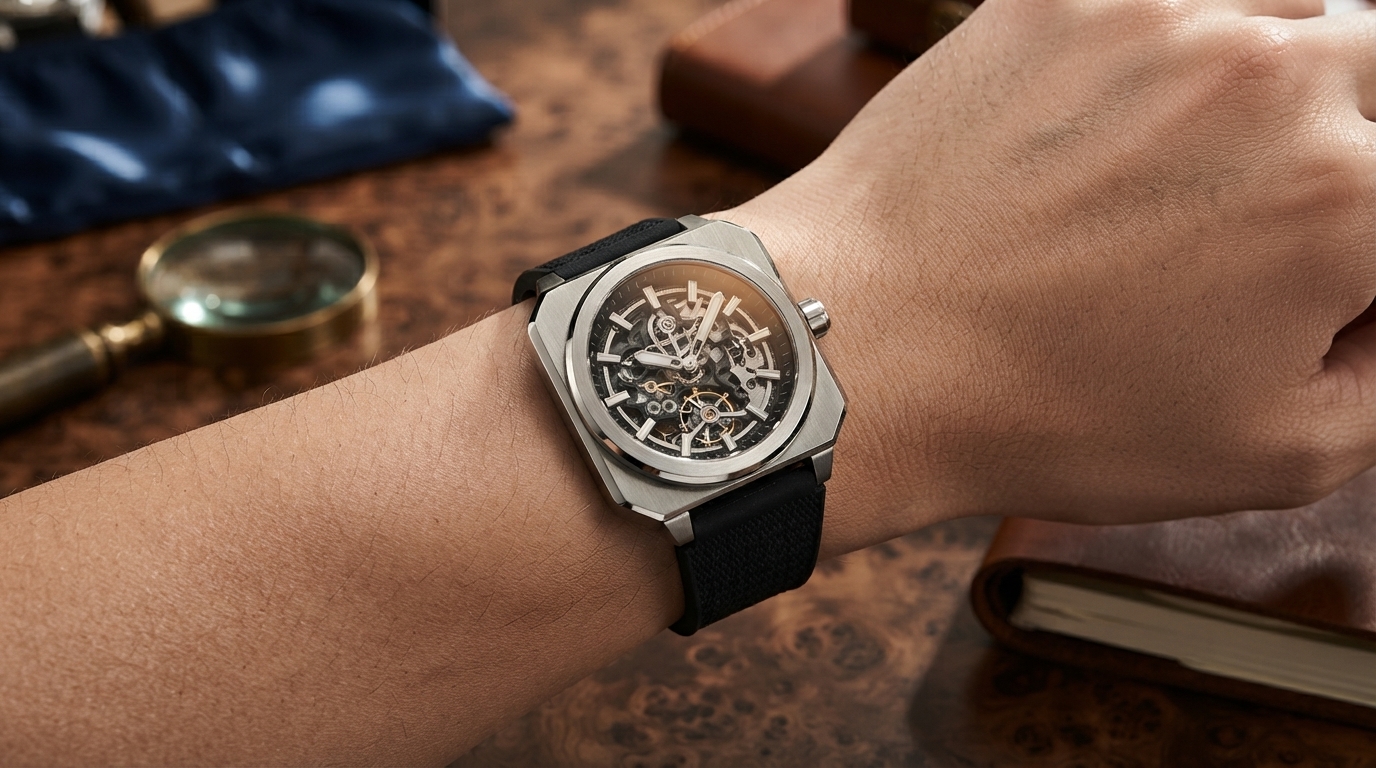
38MM Square Tourbillon Automatic Watch with Skeleton Dial & Sapphire Glass
A square-case automatic watch with a skeleton dial puts mechanical detail front and center, while sapphire glass adds crisp viewing and everyday scratch resistance. At 38mm, the proportions aim for balance—noticeable on the wrist without drifting into oversized territory—making it a statement piece that can still feel at home in daily rotation. For more guidance, see Klepcys Vertical Skeleton Tourbillon – Cyrus Genève – GPHG.
Quick overview
- 38mm square profile designed for a modern, architectural look on the wrist
- Automatic mechanical movement for self-winding convenience with wear
- Skeleton dial highlights the movement’s visible components and depth
- Sapphire glass intended to improve durability and long-term clarity
- Tourbillon-style presentation emphasizes a high-end aesthetic at an accessible price point
Design details that stand out
Square watches do something round cases rarely can: they look structured and intentional, like a piece of wearable design. The edges and corners naturally draw the eye, and the silhouette reads as contemporary even when paired with classic wardrobe staples. For further reading, see Tourbillon – Wikipedia.
- Square case geometry offers a distinctive alternative to traditional round dress watches
- Skeletonized face creates layered visual interest, especially under direct light
- Dial openness can make time reading different from a solid dial; bold hands/markers matter for quick glances
- Sapphire glass helps keep the display looking crisp by resisting minor scratches from day-to-day contact
Square skeleton watch: what each element contributes
| Element | What it changes | What to look for |
|---|---|---|
| 38mm square case | Bolder wrist presence and sharper lines | Comfort at the lugs/edges, balanced thickness |
| Skeleton dial | Mechanical depth and visible motion | Legibility of hands, contrast over busy movement parts |
| Sapphire glass | Improved scratch resistance and clarity | Clean edge finishing, minimal distortion at angles |
| Tourbillon-style display | Luxury-inspired focal point | Smooth motion and secure fit/finishing of visible parts |
Automatic movement and the tourbillon look
The appeal of an automatic watch is tactile and visual: it’s powered by a mainspring and kept going through wrist motion, turning everyday wear into the “fuel” that drives the movement. Many automatic watches also allow manual winding, which helps after the watch has been off the wrist for a while.
- Automatic watches are powered by a mainspring that winds through wrist motion, typically supported by manual winding as needed
- A tourbillon is traditionally a complex mechanism designed to improve rate stability in certain positions; many watches feature a tourbillon-inspired display for visual drama
- Best day-to-day experience comes from consistent wear or occasional winding to keep the watch running
- If the watch is not worn for a period, resetting time may be needed—common to mechanical pieces
For a deeper background on what a tourbillon is historically, see this overview: https://en.wikipedia.org/wiki/Tourbillon. And for how mechanical watches function in general, this reference is a helpful baseline: https://en.wikipedia.org/wiki/Mechanical_watch.
Comfort, sizing, and how it wears
Case shape changes everything about perceived size. A 38mm square watch often wears a touch larger than a 38mm round case because the corners expand the visual footprint. That’s great for presence—just worth remembering if the wrist is on the smaller side or if a low-profile fit is the priority.
- A 38mm square case often wears slightly larger than a 38mm round case due to the corners and visual footprint
- Ideal fit depends on wrist circumference, strap flexibility, and case thickness
- For all-day comfort: check that the case edges sit flat and the strap drapes naturally without pinching
- A skeleton dial draws attention; pairing with simpler outfits can keep the look balanced
Style-wise, a skeleton dial does the “talking.” If the watch is the focal point, keep the rest clean—solid-color knits, a simple jacket, or a crisp button-down. For dressier settings, the square case can read modern and deliberate, especially when the watch is worn snug enough to stay centered on the wrist.
Care and everyday use
Sapphire glass is known for resisting scratches far better than many alternatives, helping the dial stay clear through daily wear. For background on sapphire as a watch material, this is a useful reference: https://en.wikipedia.org/wiki/Sapphire_crystal. That said, scratch resistance isn’t the same as impact-proof—hard knocks can still cause damage to the crystal or movement.
Who this watch suits
Current product and pricing
- Product: 38MM Square Tourbillon Automatic Watch with Skeleton Dial & Sapphire Glass
- Price: $86.01 (USD)
- Availability: In stock
- Best for: statement styling, visible mechanics, and sapphire-forward durability in an accessible range
More in-stock finds
- Losing Body Fat Percentage eBook | Complete Guide on how to lose body fat percentage, Nutrition, Workouts & Lifestyle Strategies for Sustainable Fat Loss
- Helping Teens Build Healthy Connections in a Digital World – eBook Guide on how to help teens build healthy friendships, Teen Communication & Social Skills Resource
FAQ
Is a skeleton dial hard to read?
It can be, depending on the contrast between the hands/markers and the visible movement underneath. Skeleton designs often trade some instant legibility for depth and mechanical detail, so checking photos and looking for bold hands is helpful for quick time checks.
What does sapphire glass do on a watch?
Sapphire crystal is highly scratch-resistant compared with many mineral glasses, helping the dial stay clearer over time. It can still crack if the watch takes a severe impact, so avoiding hard knocks is important.
How should an automatic watch be wound and set?
Wear it regularly to keep it running, and hand-wind it if it stops (when the watch supports manual winding). Set the time gently, and if the watch includes a date function, avoid changing the date during the typical late-evening “danger window” when the mechanism may be engaged.














Leave a comment