-
Shop
- Advanced Technologies
- AI Skills Mastery 2026 Collection
- Beauty
- Best-Sellers
- Calvin Klein
- Car Accessories
- Car Buying & Ownership
- Dating & Social Confidence
- Dating & Social Skills
- Denim
- 7FOR
- AGOLDE
- Antony Morato
- Armani Exchange
- Boss
- Brunello Cucinelli
- Calvin Klein Jeans
- Costume National
- Desigual
- Diesel
- Dolce & Gabbana
- Dsquared²
- Ermanno Scervino
- Fendi
- Gianni Lupo
- Guess Jeans
- Ichi
- Just Cavalli
- Lee
- Levi's
- Liu Jo
- Morgan De Toi
- Mother Denim
- Only
- Pepe Jeans
- Pinko
- Replay
- Tommy Hilfiger Jeans
- Valentino
- Vero Moda
- Digital Resources
- Education & Learning
- Family & Parenting
- Fashion
- Alexander McQueen
- Bags & Wallets
- Balenciaga
- Belts
- Bottega Veneta
- Brunello Cucinelli
- Burberry
- Chanel
- Chloé
- Dior
- Dolce & Gabbana
- Etro
- Fendi
- Gucci
- Hats & Hair Accessories
- Jacquemus
- Jewelry
- Jil Sander
- Jimmy Choo
- Keychains
- Kiton
- Miu Miu
- Off-White
- Prada
- Rick Owens
- Saint Laurent
- Shoes
- Socks & Tights
- Sunglasses
- The Row
- Tom Ford
- Valentino
- Valentino Garavani
- Versace
- Vivienne Westwood
- Watches
- Fashion & Style
- Fashion Accessories
- Financial Education
- Find Your Path Collection
- Fitness
- Furniture
- Gadgets
- Health & Beauty
- Health & Wellness
- Home & Garden
- Home & Kitchen
- Home Styling & Organization
- Home Supplies
- Kids & Babies
- Kitchen
- Lighting
- Nike
- Online Business
- Online Business for Beginners
- Parenting
- Patio, Lawn & Garden
- Personal Growth
- Pet Care
- Pet Supplies
- Pets
- Smart Life with IA
- Sport & Outdoors
- Super Deals
- Travel
- Wealth
- Wealth Building
- Wellness
- YouTube Shorts Best-Sellers
- Popular
- Best deals
Kitchen Wine Storage Checklist: Keep Bottles Fresh
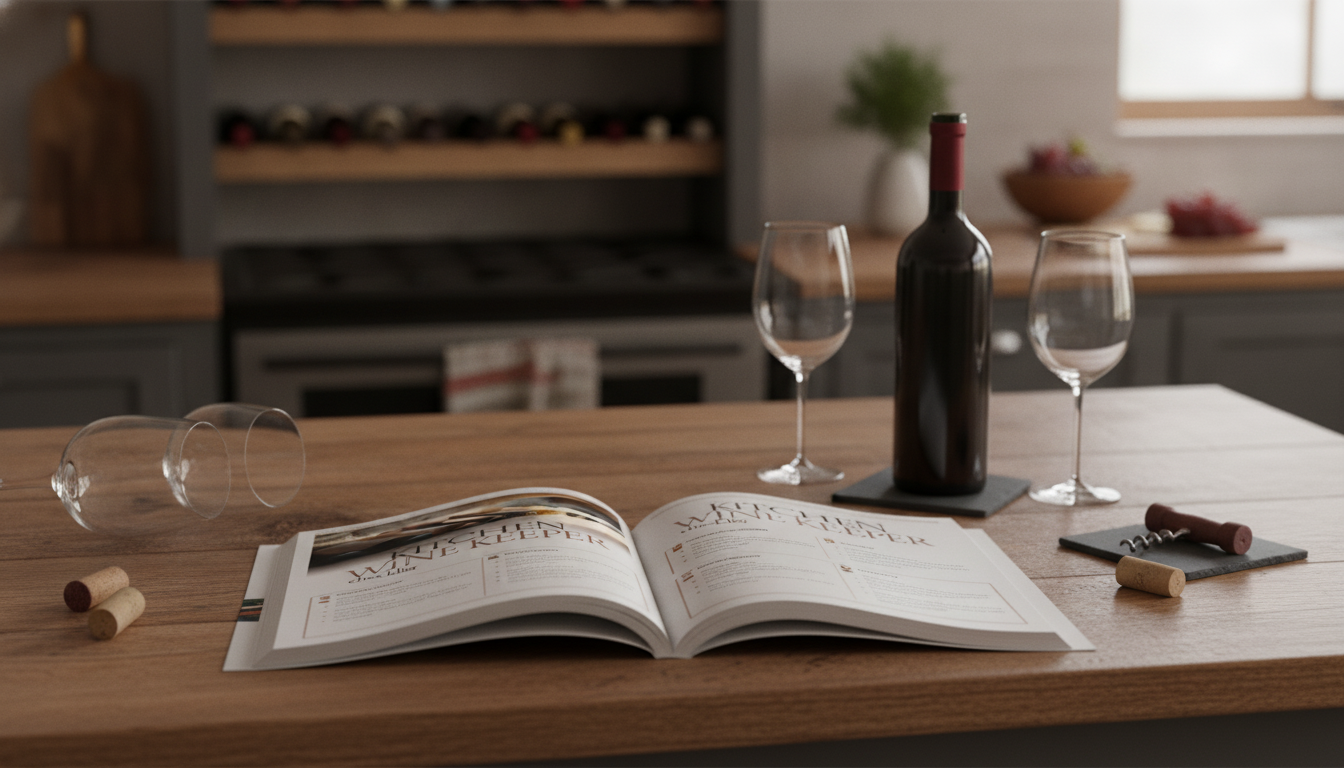
Kitchen Wine Keeper Checklist – Your Ultimate Guide for Storing Wine in the Kitchen
Storing wine in a kitchen is completely doable with the right setup. Heat swings, sunlight, vibration, and low humidity are the usual trouble spots—especially in smaller homes where the kitchen doubles as storage. Use the checklist approach below to protect flavor, avoid premature aging, and keep everyday bottles ready to pour.
The non-negotiables of good wine storage (even without a cellar)
You don’t need a dedicated cellar to treat wine well—you just need to control the biggest risks. Wine changes fastest when it’s repeatedly warmed and cooled, exposed to light, or shaken around.
- Keep it cool and steady: Aim for consistency. Avoid spots that heat up during cooking or sit against a sunny exterior wall.
- Block light: Sunlight and strong indoor lighting can slowly degrade aromas and flavor. Darkness is your friend.
- Reduce vibration: Frequent vibration (appliance hum, slamming drawers) can disturb sediment and subtly speed aging.
- Mind humidity: Extremely dry air can dry corks over long periods. Moderate humidity helps corks keep a good seal.
- Store still wines correctly: Natural-cork bottles generally do best on their side; screw caps can stay upright.
- Create “drink soon” vs. “hold” zones: Easy access shouldn’t mean disturbing every bottle every day.
For more background on storage factors like temperature and light, see general guidance from Wine Spectator and educational resources from UC Davis Viticulture & Enology.
Choose the best spot in the kitchen (and avoid the worst)
The best kitchen storage spot is boring: dark, low, and rarely disturbed. The worst spots are warm, bright, and constantly vibrating.
- Best choices: An interior cabinet away from the oven/stove, a pantry shelf with stable temperatures, or a low cabinet on an interior wall.
- Acceptable for short-term: A countertop wine rack in a shaded area, far from windows and heat sources—best for bottles you’ll open within weeks.
- Avoid: Above the fridge, near the range/oven, next to a dishwasher, in direct sunlight, or on open shelving that gets hit by daily cooking heat.
- If your kitchen runs warm: Rotate faster. Buy fewer bottles at a time and plan to drink them sooner.
- If space is tight: Dedicate one cabinet as a “quiet zone” with minimal opening/closing and no nearby heat vents.
Kitchen storage locations: what works and what doesn’t
| Location | Pros | Cons | Best for |
|---|---|---|---|
| Interior lower cabinet | Stable temps, dark, low vibration | Limited space, shared with cookware | Everyday bottles; short to medium hold |
| Pantry shelf (interior) | Often cooler/darker than open kitchen | Can be dry; may get bumped | Mixed styles; add a small rack/bin for stability |
| Countertop rack (shaded area) | Convenient access | Light exposure and heat swings | Drink-within-weeks bottles |
| Above refrigerator | Uses unused space | Warm air exhaust; big temp swings | Not recommended |
| Near oven/stove | None | High heat; rapid aging | Not recommended |
| Near dishwasher | None | Heat + vibration + steam cycles | Not recommended |
Bottle position, organization, and rotation
Good organization prevents the two most common kitchen problems: bottles rolling around (micro-vibration plus breakage risk) and “out of sight, out of mind” aging.
- Cork vs. screw cap: Store cork-sealed still wines horizontally so the cork stays properly conditioned; store screw caps upright. Sparkling wine is typically stored upright unless a producer notes otherwise.
- Sort by “open next” and “hold”: Keep a front row of ready-to-drink bottles and a back row of longer-hold bottles so you aren’t moving everything to grab one.
- Label for speed: Use removable tags with purchase date, an ideal drinking window, and a quick note (weekday red, pasta white, celebration bubbles).
- Stabilize bottles: Use sturdy dividers or a compact rack inside a cabinet to prevent rolling and reduce vibration from repeated door use.
- First-in, first-out: Once a month, slide older bottles forward. It’s the simplest way to avoid “mystery bottles” that linger too long.
If you want a simple, printable system to keep everything consistent, Kitchen Wine Keeper Checklist – Your Ultimate Guide for Storing Wine in the Kitchen is a quick-reference download that helps you set up zones, labels, and a rotation rhythm.
Open-bottle care: keeping wine fresh after the cork comes out
Once opened, wine’s biggest enemy is oxygen. The goal is to slow oxidation and preserve aromatics for a second (or third) pour.
Serving and storage basics are also covered in introductory wine education such as the WSET Level 1 Award in Wines overview, which reinforces the value of stable conditions and sensible handling.
A practical kitchen wine keeper checklist
Small upgrades that make a big difference
Related digital guides in stock
- Kitchen Wine Keeper Checklist – Your Ultimate Guide for Storing Wine in the Kitchen
- Your Go-To Ingredients for Dry, Damaged Hair – Ultimate Checklist
- Losing Body Fat Percentage eBook
FAQ
Can wine be stored in a kitchen long-term?
Kitchen storage can work for short to medium timelines if bottles are kept in a cool, dark, low-vibration cabinet away from appliances. For long-term aging, a wine fridge or dedicated cool space is more reliable.
Should wine be stored in the refrigerator before opening?
For most still wines, long-term fridge storage isn’t ideal because it’s dry and colder than necessary, but it’s fine for short-term chilling and for open bottles. Sparkling wine and many whites can stay refrigerated short-term without issues.
How long does an opened bottle last with a stopper?
It varies by style, but sealing promptly and refrigerating usually extends freshness by days. Vacuum or inert gas can help further, while sparkling wine typically loses carbonation the fastest once opened.













Leave a comment