-
Shop
- Advanced Technologies
- AI Skills Mastery 2026 Collection
- Best-Sellers
- Calvin Klein
- Car Accessories
- Car Buying & Ownership
- Dating & Social Skills
- Denim
- 7FOR
- AGOLDE
- Antony Morato
- Armani Exchange
- Boss
- Brunello Cucinelli
- Calvin Klein Jeans
- Costume National
- Desigual
- Diesel
- Dolce & Gabbana
- Dsquared²
- Ermanno Scervino
- Fendi
- Gianni Lupo
- Guess Jeans
- Ichi
- Just Cavalli
- Lee
- Levi's
- Liu Jo
- Morgan De Toi
- Mother Denim
- Only
- Pepe Jeans
- Pinko
- Replay
- Tommy Hilfiger Jeans
- Valentino
- Vero Moda
- Digital Resources
- Education & Learning
- Family & Parenting
- Fashion
- Alexander McQueen
- Bags & Wallets
- Balenciaga
- Belts
- Bottega Veneta
- Brunello Cucinelli
- Burberry
- Chanel
- Chloé
- Dior
- Dolce & Gabbana
- Etro
- Fendi
- Gucci
- Hats & Hair Accessories
- Jacquemus
- Jewelry
- Jil Sander
- Jimmy Choo
- Keychains
- Kiton
- Miu Miu
- Off-White
- Prada
- Rick Owens
- Saint Laurent
- Shoes
- Socks & Tights
- Sunglasses
- The Row
- Tom Ford
- Valentino
- Valentino Garavani
- Versace
- Vivienne Westwood
- Watches
- Fashion & Style
- Fashion Accessories
- Financial Education
- Find Your Path Collection
- Fitness
- Furniture
- Gadgets
- Health & Beauty
- Health & Wellness
- Home & Garden
- Home & Kitchen
- Home Styling & Organization
- Home Supplies
- Kids & Babies
- Kitchen
- Lighting
- Nike
- Online Business
- Online Business for Beginners
- Parenting
- Patio, Lawn & Garden
- Personal Growth
- Pet Care
- Pet Supplies
- Pets
- Smart Life with IA
- Sport & Outdoors
- Super Deals
- Travel
- Wealth
- Wealth Building
- Wellness
- YouTube Shorts Best-Sellers
- Popular
- Best deals
Mini Massage Gun 3200RPM: Lightweight Deep Tissue Relief
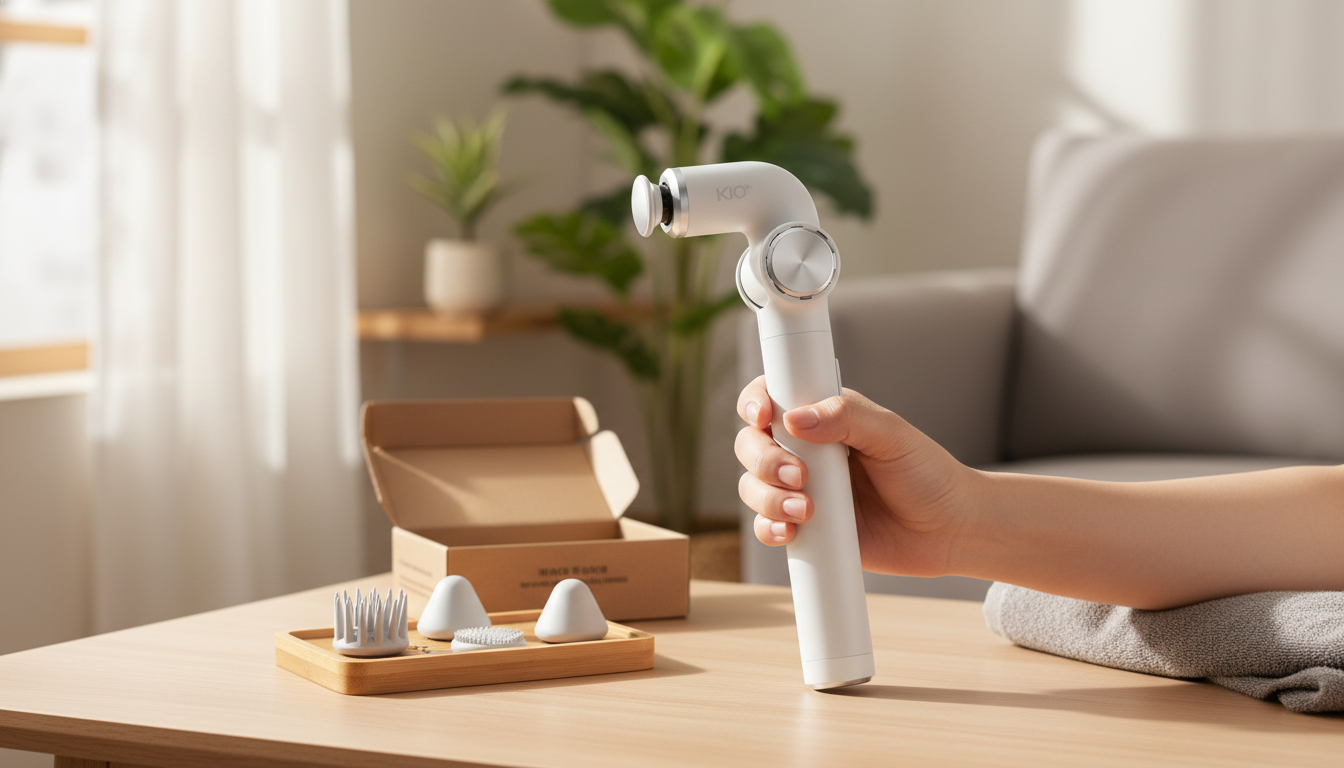
Mini Portable Deep Tissue Massage Gun: 3200RPM Power in a Lightweight Design
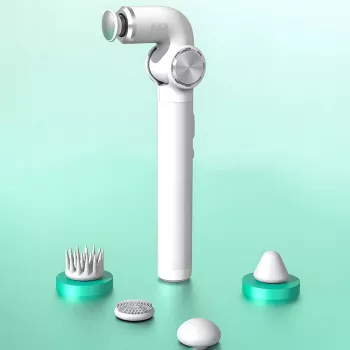
A compact percussion massager can make post-workout recovery, desk-day stiffness relief, and travel-friendly muscle care easier—without hauling a bulky device. This mini model pairs up to 3200RPM percussion with four interchangeable heads in a lightweight body for quick, targeted sessions at home, the gym, or on the go.
What a mini percussion massager does (and what it doesn’t)
A mini massage gun uses rapid, repeated pulses to stimulate soft tissue and help ease muscle tightness after activity or long periods of sitting. Many people reach for percussion as part of a warm-up (short, light passes) or for recovery (slower, more focused work) to support comfort and mobility—especially when time is limited.
It’s also important to keep expectations realistic. A percussion device isn’t a substitute for medical treatment, and it won’t “fix” underlying injuries. Persistent pain, numbness, swelling, bruising, or injury symptoms are signals to pause and get professional guidance. For most users, the best results come from short, consistent sessions rather than long, high-pressure use that can leave tissue irritated.
For a practical overview of benefits and risks, see Cleveland Clinic’s guidance on percussion massage.
Key highlights of the Mini Portable Deep Tissue Massage Gun
The appeal of a mini model is straightforward: it’s easy to keep within reach, which makes it easier to use regularly. The Mini Portable Deep Tissue Massage Gun – 3200RPM, 4 Heads, Lightweight is built around fast percussion in a compact, grab-and-go format.
- Percussion speed up to 3200RPM for firm, fast pulses suited to large muscle groups and post-training soreness.
- Four interchangeable heads so you can switch from broad coverage to more focused targeting.
- Lightweight, compact form factor that fits easily into a gym bag, work tote, or carry-on.
- Quick, targeted sessions for calves, quads, glutes, upper back, and forearms—especially after repetitive activity.
Attachment heads: what each one is for
Swapping heads isn’t just a “nice to have”—it changes how pressure distributes across the tissue. Broader heads typically feel more forgiving on large, dense muscles (glutes, quads, hamstrings), while smaller heads can help you work tighter areas (forearms, around the shoulders) without having to press as hard.
Start with lower intensity and lighter pressure until the body adapts, then increase gradually over multiple sessions. Avoid bony areas (spine, kneecap, shin, elbow tip) and sensitive regions (front of the neck, armpit). Staying on the muscle belly is the simplest rule for safer, more comfortable use.
Quick guide to common massage gun heads and where to use them
| Head type | Best for | How it feels | Tips |
|---|---|---|---|
| Ball | General use on large muscles (quads, glutes, calves) | Rounded, balanced pressure | Keep moving slowly; reduce pressure near joints |
| Flat | Broad areas (back, thighs) and overall warm-up | More surface contact, less “pinpoint” | Great starter head for first-time users |
| Bullet / Cone | Targeted spots (trigger points), feet, forearms | Focused, intense | Use briefly; avoid nerves and bony edges |
| Fork / U-shape | Along sides of spine, Achilles area (not on bone) | Channel-style pressure | Glide beside the spine, not directly on it |
How to use it: simple routines for warm-up and recovery
Think “dose and consistency” instead of “more is better.” The goal is to help muscles feel looser and more ready to move, not to grind through discomfort.
- Warm-up (3–5 minutes total): Use a broad head, light pressure, and quicker passes over the muscles you’re about to train.
- Recovery (5–10 minutes total): Slow down, focus on tight areas, and pause briefly on tender spots without forcing through sharp pain.
- Timing per area: 30–60 seconds per muscle group; repeat 1–2 rounds as needed.
- Technique: Breathing helps muscles relax; keep the device moving to avoid over-irritating one spot.
- Aftercare: Hydration and gentle stretching can complement the post-session “loosened up” feeling.
For a broader self-care framework, the American Council on Exercise (ACE) offers helpful context on self-myofascial release basics at ACE’s blog resources.
Choosing the right speed and pressure (3200RPM and beyond)
RPM is only part of the intensity equation. The attachment style and how much pressure you apply can make a higher speed feel surprisingly manageable—or make a moderate speed feel too aggressive.
For readers who like to dig into the research landscape, PubMed is a useful starting point for reviews on percussive and vibration therapy: PubMed.
Where a lightweight mini model shines
Safety notes and who should check with a professional first
Care, storage, and getting consistent results
Product details and where to get it
If you want a simple, portable option designed for quick, targeted muscle care, the Mini Portable Deep Tissue Massage Gun – 3200RPM, 4 Heads, Lightweight is in stock and built for on-the-go convenience.
For training support beyond tools, structured nutrition and lifestyle guidance can make recovery feel easier to manage day to day. The Losing Body Fat Percentage eBook is also in stock for readers who want a straightforward approach to sustainable progress.
FAQ
How long should a massage gun be used on one muscle group?
A practical range is 30–60 seconds per muscle group, repeating 1–2 rounds if needed, for about 5–10 minutes total. Stop early if the area gets more painful, irritated, numb, or tingly.
Is 3200RPM too intense for daily use?
Not necessarily—intensity depends on your pressure and the head you use. Start with lighter pressure and broader heads, use higher speed briefly on large muscles, and avoid sensitive or bony areas.
Which head should be used for shoulders and upper back?
The flat or ball head usually works best for broad coverage with lighter pressure. Keep the device moving, stay off the spine, and avoid the front of the neck; use the bullet head only briefly on small, tolerant spots.












Leave a comment