-
Shop
- Advanced Technologies
- AI Skills Mastery 2026 Collection
- Best-Sellers
- Calvin Klein
- Car Accessories
- Car Buying & Ownership
- Dating & Social Skills
- Denim
- 7FOR
- AGOLDE
- Antony Morato
- Armani Exchange
- Boss
- Brunello Cucinelli
- Calvin Klein Jeans
- Costume National
- Desigual
- Diesel
- Dolce & Gabbana
- Dsquared²
- Ermanno Scervino
- Fendi
- Gianni Lupo
- Guess Jeans
- Ichi
- Just Cavalli
- Lee
- Levi's
- Liu Jo
- Morgan De Toi
- Mother Denim
- Only
- Pepe Jeans
- Pinko
- Replay
- Tommy Hilfiger Jeans
- Valentino
- Vero Moda
- Digital Resources
- Education & Learning
- Family & Parenting
- Fashion
- Alexander McQueen
- Bags & Wallets
- Balenciaga
- Belts
- Bottega Veneta
- Brunello Cucinelli
- Burberry
- Chanel
- Chloé
- Dior
- Dolce & Gabbana
- Etro
- Fendi
- Gucci
- Hats & Hair Accessories
- Jacquemus
- Jewelry
- Jil Sander
- Jimmy Choo
- Keychains
- Kiton
- Miu Miu
- Off-White
- Prada
- Rick Owens
- Saint Laurent
- Shoes
- Socks & Tights
- Sunglasses
- The Row
- Tom Ford
- Valentino
- Valentino Garavani
- Versace
- Vivienne Westwood
- Watches
- Fashion & Style
- Fashion Accessories
- Financial Education
- Find Your Path Collection
- Fitness
- Furniture
- Gadgets
- Health & Beauty
- Health & Wellness
- Home & Garden
- Home & Kitchen
- Home Styling & Organization
- Home Supplies
- Kids & Babies
- Kitchen
- Lighting
- Nike
- Online Business
- Online Business for Beginners
- Parenting
- Patio, Lawn & Garden
- Personal Growth
- Pet Care
- Pet Supplies
- Pets
- Smart Life with IA
- Sport & Outdoors
- Super Deals
- Travel
- Wealth
- Wealth Building
- Wellness
- YouTube Shorts Best-Sellers
- Popular
- Best deals
Ceramic-Bezel GMT Diver: Sapphire Clarity, Travel Ready
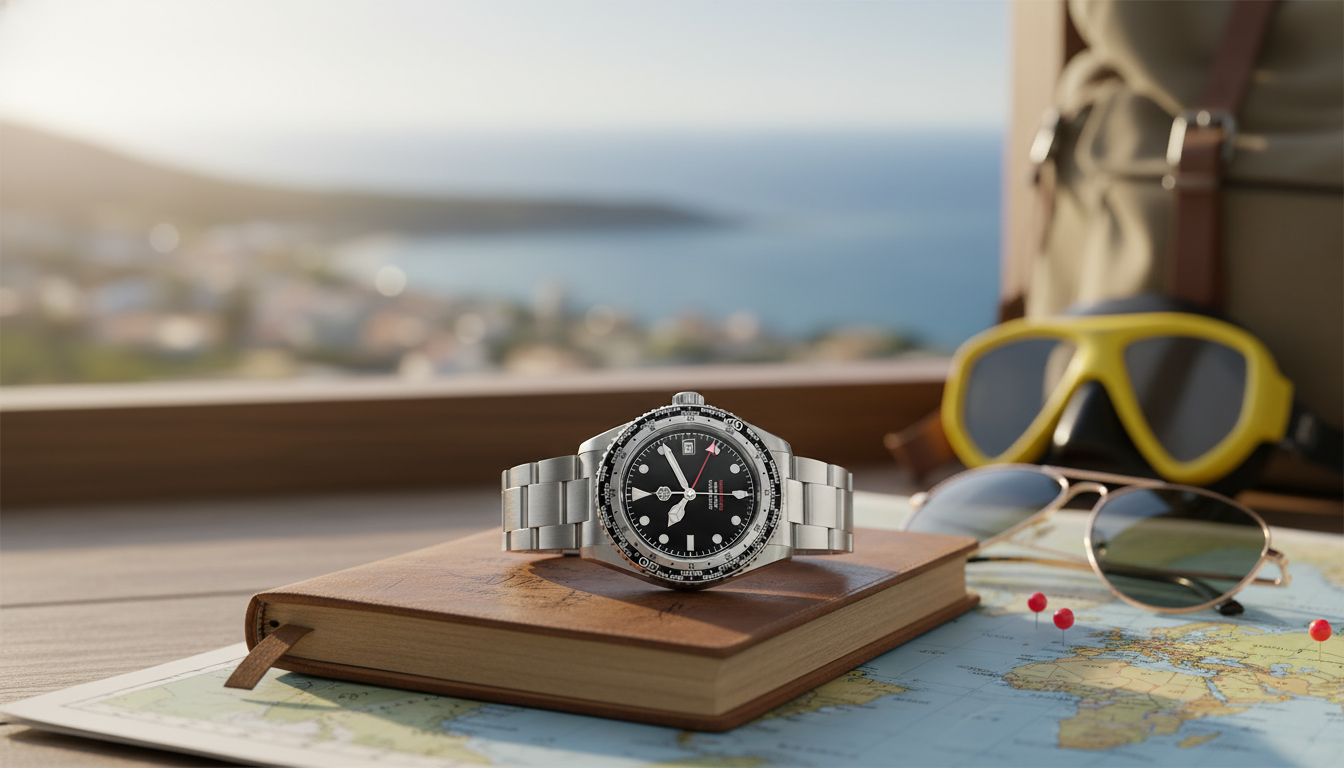
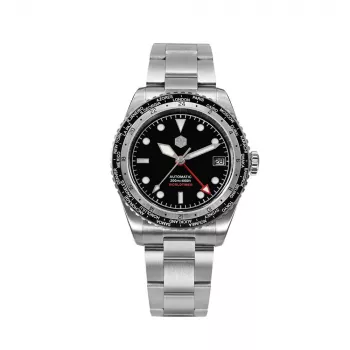
Luxury GMT Automatic Diving Watch with Ceramic Bezel & Sapphire Glass
A GMT dive watch blends two proven tool-watch ideas into one everyday companion: the underwater-ready visibility and timing control of a diver, plus a second time zone display that’s genuinely useful for travel, remote work, and keeping “home time” close. Add a ceramic bezel for long-wearing looks and sapphire glass for crisp clarity, and you get a sport-luxury profile that can take real use while still feeling refined on the wrist.
What Makes This Style of Watch Special
This category stands out because it’s designed to do more than look rugged. A well-executed GMT diver offers purpose-driven features that stay practical long after the honeymoon phase.
- Dual-purpose design: bold dive-watch legibility and bezel timing utility paired with a GMT display to track a second time zone.
- Automatic movement appeal: mechanical self-winding operation that avoids routine battery changes and feels “alive” on the wrist.
- Premium materials where it matters: ceramic bezel inserts and sapphire crystals are chosen for wear resistance and long-term appearance.
- Luxury cues: crisp finishing, confident marker design, and a sport-elegant silhouette that can dress up easily.
If you’re ready to see the full listing and current pricing, view the Luxury GMT Automatic Diving Watch with Ceramic Bezel & Sapphire Glass.
Ceramic Bezel and Sapphire Glass: Practical Benefits
Two upgrades typically define the “buy once, wear often” experience in this style: ceramic for the bezel insert and sapphire for the crystal. Each addresses the kinds of wear that show up quickly on daily-worn sport watches.
Why ceramic bezels stay sharp-looking
- Scratch resistance: ceramic resists the hairline scuffs that can dull the look of aluminum inserts over time.
- Color stability: ceramic is known for holding its color well, helping the bezel keep a clean, consistent tone.
- Long-term “crisp” factor: a bezel is one of the first areas to show wear; ceramic keeps the watch looking newer for longer.
Why sapphire crystals are a daily-wear advantage
- Excellent scratch resistance: ideal for a tool-style watch that sees doorframes, desktops, and travel bags.
- Clarity over time: fewer scratches means the dial stays easier to read year after year.
- Glare management matters: anti-reflective coatings (when included) can improve readability in bright sunlight and at viewing angles.
It’s also worth knowing the “impact reality check”: sapphire is very hard and highly scratch resistant, but a sharp hit can still chip or crack a crystal. Treat it like premium glass, not an indestructible shield. For background on sapphire as a mineral, see Encyclopaedia Britannica’s sapphire reference.
Quick Feature Checklist to Confirm Before Purchase
| Feature | Why it matters | What to verify on the product page |
|---|---|---|
| Water resistance rating | Determines suitability for swimming/diving and the safety margin for daily exposure | The exact depth rating (e.g., 100 m / 200 m) and any stated compliance/standard claims |
| Bezel type and action | A secure, grippy bezel is key for timing; a precise click feel improves control | Whether the bezel is unidirectional (typical dive) or bidirectional, and how the bezel scale is used (minutes/24-hour) |
| GMT implementation | A true travel GMT is easier for frequent flyers; a caller GMT suits office and remote-work needs | Whether the local hour hand jumps independently or the GMT hand is set independently |
| Crystal details | Coatings influence glare and legibility; sapphire supports long-term clarity | Sapphire material confirmation and any anti-reflective coating notes |
| Lume and dial contrast | Legibility is the core of a dive-style watch, especially in low light | Type/brightness of luminous material (if specified) and high-contrast marker design |
| Crown and caseback sealing | These are common water-entry points if not properly designed/used | Screw-down crown/caseback notes and any guidance on crown operation |
GMT Function: How It Fits Travel and Everyday Use
GMT on a watch typically means an additional 24-hour hand that completes one rotation per day. That 24-hour reference makes time zones easier to track at a glance—especially when schedules cross morning/night boundaries.
For an official reference point on timekeeping, NIST maintains the U.S. civilian time standard—helpful when syncing watches for travel or work: NIST Time and Frequency.
Dive-Ready Design Essentials to Look For
For those who want to understand how true dive watch standards are defined, the ISO overview for divers’ watches is a useful read: ISO 6425 — Divers’ watches.
Comfort, Sizing, and Wearing Style
Care and Maintenance for Long-Term Reliability
Availability and Purchase Details
- Luxury GMT Automatic Diving Watch with Ceramic Bezel & Sapphire Glass
- Losing Body Fat Percentage eBook | Complete Guide on how to lose body fat percentage, Nutrition, Workouts & Lifestyle Strategies for Sustainable Fat Loss
- Your Go-To Ingredients for Dry, Damaged Hair – Ultimate Checklist of Ingredients for Dry Damaged Hair, Hair Repair Guide, Healthy Hair Care Digital Download
FAQ
Is a ceramic bezel better than an aluminum bezel?
Ceramic is typically more scratch resistant and tends to look cleaner over years of wear, while aluminum can show scuffs and fading sooner. The tradeoff is that ceramic can chip with a sharp impact, whereas aluminum inserts are often easier and cheaper to replace.
What does GMT mean on a watch and how is it used?
GMT refers to an extra 24-hour display (usually a fourth hand) that tracks a second time zone alongside local time. Many owners set the GMT hand to home time and use the main hands for local time; some setups can also use a 24-hour bezel/scale to reference a third time zone.
Does sapphire glass make a watch unbreakable?
No—sapphire is highly scratch resistant, but it can still crack or chip if it takes a hard, sharp impact. Coatings mainly affect glare and readability rather than making the crystal “unbreakable.”
Recommended for you
Pointed-Toe Leather Loafers with Chunky Heel (Women)
May 30, 2026












Leave a comment