-
Shop
- Advanced Technologies
- AI Skills Mastery 2026 Collection
- Beauty
- Best-Sellers
- Calvin Klein
- Car Accessories
- Car Buying & Ownership
- Dating & Social Confidence
- Dating & Social Skills
- Denim
- 7FOR
- AGOLDE
- Antony Morato
- Armani Exchange
- Boss
- Brunello Cucinelli
- Calvin Klein Jeans
- Costume National
- Desigual
- Diesel
- Dolce & Gabbana
- Dsquared²
- Ermanno Scervino
- Fendi
- Gianni Lupo
- Guess Jeans
- Ichi
- Just Cavalli
- Lee
- Levi's
- Liu Jo
- Morgan De Toi
- Mother Denim
- Only
- Pepe Jeans
- Pinko
- Replay
- Tommy Hilfiger Jeans
- Valentino
- Vero Moda
- Digital Resources
- Education & Learning
- Family & Parenting
- Fashion
- Alexander McQueen
- Bags & Wallets
- Balenciaga
- Belts
- Bottega Veneta
- Brunello Cucinelli
- Burberry
- Chanel
- Chloé
- Dior
- Dolce & Gabbana
- Etro
- Fendi
- Gucci
- Hats & Hair Accessories
- Jacquemus
- Jewelry
- Jil Sander
- Jimmy Choo
- Keychains
- Kiton
- Miu Miu
- Off-White
- Prada
- Rick Owens
- Saint Laurent
- Shoes
- Socks & Tights
- Sunglasses
- The Row
- Tom Ford
- Valentino
- Valentino Garavani
- Versace
- Vivienne Westwood
- Watches
- Fashion & Style
- Fashion Accessories
- Financial Education
- Find Your Path Collection
- Fitness
- Furniture
- Gadgets
- Health & Beauty
- Health & Wellness
- Home & Garden
- Home & Kitchen
- Home Styling & Organization
- Home Supplies
- Kids & Babies
- Kitchen
- Lighting
- Nike
- Online Business
- Online Business for Beginners
- Parenting
- Patio, Lawn & Garden
- Personal Growth
- Pet Care
- Pet Supplies
- Pets
- Smart Life with IA
- Sport & Outdoors
- Super Deals
- Travel
- Wealth
- Wealth Building
- Wellness
- YouTube Shorts Best-Sellers
- Popular
- Best deals
Teen Digital Friendships: Boundaries, Conflict & Connection

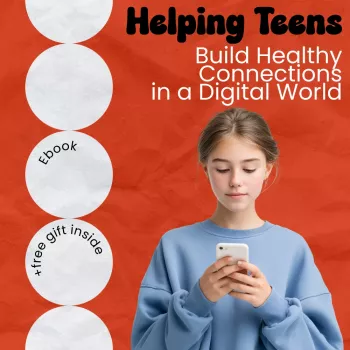
Helping Teens Build Healthy Connections in a Digital World
Teens are building friendships across group chats, gaming platforms, social media, and school hallways all at once. The challenge is making sure those connections stay supportive, respectful, and real—while also helping teens handle conflict, boundaries, and the pressure to be “always on.” Healthy friendship skills can be taught in small, practical steps that fit everyday life at home, at school, and online.
Why digital friendships feel intense for teens
Digital connection can feel high-stakes because it’s constant, visible, and easy to misread. A short message can be interpreted ten different ways, and a screenshot can make a private moment feel permanent.
- Always-available communication can amplify misunderstandings and create pressure to respond immediately.
- Blurred public vs. private lines make rumors, reposts, and screenshots feel lasting.
- Social scoring (likes, streaks, followers) can turn friendship into a leaderboard tied to belonging.
- Text-only communication removes tone and context, so minor issues can escalate quickly.
- Offline anchors still matter: activities, supportive adults, and downtime help regulate stress and perspective.
For a helpful overview of teen social media dynamics and family guidance, the American Academy of Pediatrics has practical, research-informed tips: American Academy of Pediatrics — Social Media and Teens.
What healthy connections look like (online and offline)
Healthy friendships aren’t perfect—they’re repairable. They protect dignity, respect boundaries, and leave room for each person to grow.
- Mutual respect: no humiliation, name-calling, or “jokes” that sting.
- Consent and boundaries: asking before sharing photos, messages, or personal details.
- Reliability: honesty and follow-through over time.
- Repair after conflict: apologizing, clarifying, and changing behavior (not repeating the same harm).
- Room to grow: friendships that tolerate changing interests, identities, and schedules.
Signals of supportive vs. harmful friendship dynamics
| Area | Supportive signals | Concerning signals |
|---|---|---|
| Communication | Direct, respectful; can disagree safely | Silent treatment, threats, public callouts |
| Privacy | Asks before posting or forwarding | Shares screenshots; pressure to reveal secrets |
| Boundaries | Accepts “no” without punishment | Guilt-trips, demands access, monitors activity |
| Conflict | Works toward repair and clarity | Escalates, recruits others, repeats the pattern |
| Online behavior | Uses group chats kindly; avoids dogpiling | Harassment, exclusion, pile-ons, fake accounts |
Core social skills teens can practice this week
Skill-building works best when it’s specific and repeatable. Pick one or two skills, practice them in low-stakes moments, and reflect on what changed.
- Conversation basics: try openers that don’t feel intense—observations, shared interests, or simple questions (“What’d you think of the game update?”).
- Active listening: summarize what you heard before responding (“So you felt left out when we made plans?”).
- Perspective-taking: name two explanations before assuming the worst (busy day, misread tone, stress at home).
- Assertiveness: use calm “I” statements that set limits without attacking (“I’m not okay with that. Please stop.”).
- Micro-repairs: fix small ruptures fast (“That came out wrong—can I try again?”).
These skills also support overall teen wellbeing—something public health organizations emphasize as part of adolescent development and school success: CDC — Adolescent and School Health.
Communication scripts for common teen situations
Scripts aren’t about sounding “perfect.” They reduce panic and help teens stay aligned with their values when emotions run hot.
- Setting boundaries: “I’m not comfortable with that. Please don’t send me those messages.”
- Handling group chat drama: “I’m going to step out of this conversation. Let’s talk 1:1 later.”
- Responding to teasing: “That’s not funny to me. Stop.”
- Repairing after a mistake: “I messed up. I’m sorry. Here’s what I’ll do differently.”
- Making plans: “Want to hang out after school Friday? If not, another day works too.”
Guidance for parents and caregivers without constant surveillance
Teens need privacy and autonomy—but they also need coaching and protection. The goal is to build judgment, not just compliance.
Handling red flags: exclusion, harassment, and risky online behavior
For clear steps on bullying and what families can do, use: StopBullying.gov — What You Can Do.
A practical resource to support friendship and communication skills
For families, counselors, and educators who want a structured way to practice these skills, Helping Teens Build Healthy Connections in a Digital World – eBook Guide on how to help teens build healthy friendships, Teen Communication & Social Skills Resource is designed to turn “good advice” into repeatable habits.
Confidence also grows when teens have simple self-care routines that reduce stress and self-consciousness. For a quick, practical approach, consider Your Go-To Ingredients for Dry, Damaged Hair – Ultimate Checklist of Ingredients for Dry Damaged Hair, Hair Repair Guide, Healthy Hair Care Digital Download as an easy, non-overwhelming checklist.
FAQ
How can a teen make friends if they feel awkward or shy online?
Start with low-pressure spaces tied to genuine interests (clubs, fandoms, gaming communities) and send short, friendly messages that don’t demand a big response. Focus on consistency—showing up, being kind, and gradually sharing more—rather than trying to be popular fast.
What should a parent do when a group chat becomes toxic?
Stay calm, help your teen save evidence, and support them in muting, leaving, or blocking as needed. If harassment involves school peers or threats, contact school supports and keep the focus on boundaries and safety instead of public escalation.
How can teens set boundaries without losing friends?
Use clear, respectful statements and offer alternatives when possible (like switching to a different topic or talking 1:1 later). Friends who respect limits tend to become safer, stronger connections—boundary-setting filters out relationships that rely on pressure.
Recommended for you


Are Calfskin Wallets Good? Durability, Feel & Care
May 27, 2026













Leave a comment