-
Shop
- Advanced Technologies
- AI Skills Mastery 2026 Collection
- Beauty
- Best-Sellers
- Calvin Klein
- Car Accessories
- Car Buying & Ownership
- Dating & Social Confidence
- Dating & Social Skills
- Denim
- 7FOR
- AGOLDE
- Antony Morato
- Armani Exchange
- Boss
- Brunello Cucinelli
- Calvin Klein Jeans
- Costume National
- Desigual
- Diesel
- Dolce & Gabbana
- Dsquared²
- Ermanno Scervino
- Fendi
- Gianni Lupo
- Guess Jeans
- Ichi
- Just Cavalli
- Lee
- Levi's
- Liu Jo
- Morgan De Toi
- Mother Denim
- Only
- Pepe Jeans
- Pinko
- Replay
- Tommy Hilfiger Jeans
- Valentino
- Vero Moda
- Digital Resources
- Education & Learning
- Family & Parenting
- Fashion
- Alexander McQueen
- Bags & Wallets
- Balenciaga
- Belts
- Bottega Veneta
- Brunello Cucinelli
- Burberry
- Chanel
- Chloé
- Dior
- Dolce & Gabbana
- Etro
- Fendi
- Gucci
- Hats & Hair Accessories
- Jacquemus
- Jewelry
- Jil Sander
- Jimmy Choo
- Keychains
- Kiton
- Miu Miu
- Off-White
- Prada
- Rick Owens
- Saint Laurent
- Shoes
- Socks & Tights
- Sunglasses
- The Row
- Tom Ford
- Valentino
- Valentino Garavani
- Versace
- Vivienne Westwood
- Watches
- Fashion & Style
- Fashion Accessories
- Financial Education
- Find Your Path Collection
- Fitness
- Furniture
- Gadgets
- Health & Beauty
- Health & Wellness
- Home & Garden
- Home & Kitchen
- Home Styling & Organization
- Home Supplies
- Kids & Babies
- Kitchen
- Lighting
- Nike
- Online Business
- Online Business for Beginners
- Parenting
- Patio, Lawn & Garden
- Personal Growth
- Pet Care
- Pet Supplies
- Pets
- Smart Life with IA
- Sport & Outdoors
- Super Deals
- Travel
- Wealth
- Wealth Building
- Wellness
- YouTube Shorts Best-Sellers
- Popular
- Best deals
Pomodoro Task-Busting for Entrepreneurs: Overwhelm to Output

Task-Busting with Pomodoro: From Overwhelm to Output (Entrepreneur Checklist)
When the to-do list keeps growing, progress depends less on motivation and more on a repeatable system. Pomodoro turns big, fuzzy business work into timed, finishable sprints—so priorities become actions, distractions get contained, and the day produces visible output.
Why overwhelm happens in entrepreneurial work
Entrepreneur work is uniquely prone to overload because it mixes strategy, execution, and constant decision-making—often without clear stopping points.
- Too many open loops: multiple projects, clients, and decisions competing for attention
- Tasks that are unclear or too large to start: no obvious “next action”
- Constant context switching: bouncing between creative, admin, and communication work
- Reactive input: messages and notifications crowd out proactive output
- No consistent end point: “working” expands, leading to fatigue and avoidance
Pomodoro helps by narrowing attention to one short finish line at a time—useful when attention is a limited resource (see the APA definition of attention).
The Pomodoro method in one simple business-friendly loop
Pomodoro works best when it’s treated like a loop you can repeat all day, not a productivity “mood.”
- Choose one outcome for the next 25 minutes (a deliverable or a specific next action).
- Set a timer for 25 minutes and work on only that task until the timer ends.
- Take a 5-minute break: stand, breathe, hydrate—avoid starting a new work stream.
- After 4 cycles, take a longer break (15–30 minutes) to reset energy.
- Track completed cycles to estimate effort and protect time for deep work.
If you want a quick refresher on the classic structure, the official overview is helpful: The Pomodoro Technique.
Pomodoro timing options for different business tasks
| Task type | Recommended sprint | Break | Example deliverable |
|---|---|---|---|
| Admin & inbox | 15–25 min | 5 min | Clear 10 emails or process 5 invoices |
| Creative work | 25–50 min | 5–10 min | Draft 600 words or outline 1 campaign |
| Sales & outreach | 25 min | 5 min | Send 8 tailored follow-ups |
| Learning & planning | 25 min | 5 min | Summarize 1 lesson and define 3 next actions |
Task-busting: turning a vague project into Pomodoro-sized actions
Most “procrastination” in business work is really a sizing problem. Task-busting is the habit of shrinking work until it has a clear start line and a finish you can hit within one or two sprints.
- Name the project outcome in one sentence: what “done” looks like.
- List the smallest visible next actions: use verbs that create evidence (draft, send, edit, publish, reconcile).
- Make each action completable in 1–2 Pomodoros: if it feels heavy, split again.
- Define the start line: open the file, pull the data, write the first paragraph, create the invoice draft.
- Create a “parking lot” note: capture ideas/distractions so the sprint stays single-track.
For a ready-to-use template that turns overloaded work into finishable sprints, use Task-Busting with Pomodoro: From Overwhelm to Output | Productivity Checklist for Entrepreneurs.
From overwhelm to output: a 10-step daily checklist
This routine is designed to create momentum fast, while keeping the day realistic.
- 1) Brain-dump every open loop (2–5 minutes).
- 2) Pick today’s top 1–3 outcomes (not more).
- 3) Convert each outcome into next actions sized for 1–2 Pomodoros.
- 4) Assign an order: hardest/most important first when energy is high.
- 5) Decide the first sprint deliverable (one clear finish line).
- 6) Start the timer and remove obvious friction (tabs closed, phone away, notifications off).
- 7) During the sprint, only capture interruptions in the parking lot—don’t follow them.
- 8) Break: move, breathe, reset posture; avoid replacing work with scrolling.
- 9) After each cycle, mark what changed in the real world (sent, drafted, published, shipped).
- 10) End-of-day reset: note wins, log remaining next actions, and set the first sprint for tomorrow.
Using Pomodoro for common entrepreneur workflows
Pomodoro is flexible: the timer stays the same, but “evidence of progress” changes by workflow.
- Content creation: alternate drafting and editing sprints to reduce perfectionism (draft fast, edit later).
- Client delivery: define evidence each sprint (a section completed, assets organized, report sent).
- Marketing: batch similar tasks (one sprint for research, one for writing, one for scheduling).
- Operations: time-box recurring tasks so they don’t expand (bookkeeping, reporting, planning).
- Decision-making: one sprint to gather inputs, one sprint to decide, one sprint to communicate.
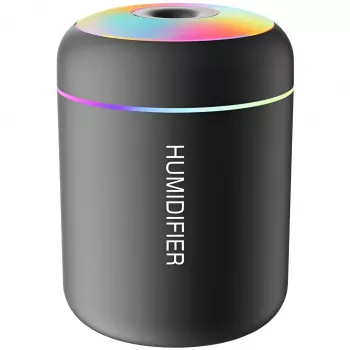
For work sessions, small environment cues can help breaks feel restorative. A desk-friendly option is the Mini USB Aroma Humidifier & Essential Oil Diffuser with Soft LED Light—use it as a “break ritual” signal so you actually reset between cycles.
Distraction-proofing each sprint without relying on willpower
The goal isn’t to become a focus machine; it’s to make distraction less “sticky” when it appears.
A simple weekly review to improve estimates and reduce overload
Sleep quality also affects attention and execution speed; protecting it keeps your “25 minutes” effective (see the NHS on why sleep is important).
Productivity checklist download: when a template helps most
If you want a simple print-and-use format, start with Task-Busting with Pomodoro: From Overwhelm to Output | Productivity Checklist for Entrepreneurs and run it for five workdays before changing anything—consistency is what makes the loop feel lighter.
FAQ
What if a task can’t be finished in one Pomodoro?
Define a smaller deliverable that can be completed in 25 minutes (outline section headings, draft the intro, reconcile one account). If it still feels too large, split again and continue across multiple cycles.
How many Pomodoros should be planned for a workday?
Start with 8–12 cycles for a full day depending on meetings and energy. Protect at least 4 cycles for deep work, then add smaller cycles for admin and communication.
Is Pomodoro still useful with meetings and interruptions?
Use shorter sprints between meetings (15–25 minutes), treat meetings as fixed blocks, and keep a parking lot for interruptions. Batch messages into dedicated communication windows.
Recommended for you


Knitted Throw Blanket Size Guide: Best Dimensions
May 25, 2026













Leave a comment