-
Shop
- Advanced Technologies
- AI Skills Mastery 2026 Collection
- Beauty
- Best-Sellers
- Calvin Klein
- Car Accessories
- Car Buying & Ownership
- Dating & Social Confidence
- Dating & Social Skills
- Denim
- 7FOR
- AGOLDE
- Antony Morato
- Armani Exchange
- Boss
- Brunello Cucinelli
- Calvin Klein Jeans
- Costume National
- Desigual
- Diesel
- Dolce & Gabbana
- Dsquared²
- Ermanno Scervino
- Fendi
- Gianni Lupo
- Guess Jeans
- Ichi
- Just Cavalli
- Lee
- Levi's
- Liu Jo
- Morgan De Toi
- Mother Denim
- Only
- Pepe Jeans
- Pinko
- Replay
- Tommy Hilfiger Jeans
- Valentino
- Vero Moda
- Digital Resources
- Education & Learning
- Family & Parenting
- Fashion
- Alexander McQueen
- Bags & Wallets
- Balenciaga
- Belts
- Bottega Veneta
- Brunello Cucinelli
- Burberry
- Chanel
- Chloé
- Dior
- Dolce & Gabbana
- Etro
- Fendi
- Gucci
- Hats & Hair Accessories
- Jacquemus
- Jewelry
- Jil Sander
- Jimmy Choo
- Keychains
- Kiton
- Miu Miu
- Off-White
- Prada
- Rick Owens
- Saint Laurent
- Shoes
- Socks & Tights
- Sunglasses
- The Row
- Tom Ford
- Valentino
- Valentino Garavani
- Versace
- Vivienne Westwood
- Watches
- Fashion & Style
- Fashion Accessories
- Financial Education
- Find Your Path Collection
- Fitness
- Furniture
- Gadgets
- Health & Beauty
- Health & Wellness
- Home & Garden
- Home & Kitchen
- Home Styling & Organization
- Home Supplies
- Kids & Babies
- Kitchen
- Lighting
- Nike
- Online Business
- Online Business for Beginners
- Parenting
- Patio, Lawn & Garden
- Personal Growth
- Pet Care
- Pet Supplies
- Pets
- Smart Life with IA
- Sport & Outdoors
- Super Deals
- Travel
- Wealth
- Wealth Building
- Wellness
- YouTube Shorts Best-Sellers
- Popular
- Best deals
Pinterest Affiliate Marketing for Beginners: Step-by-Step
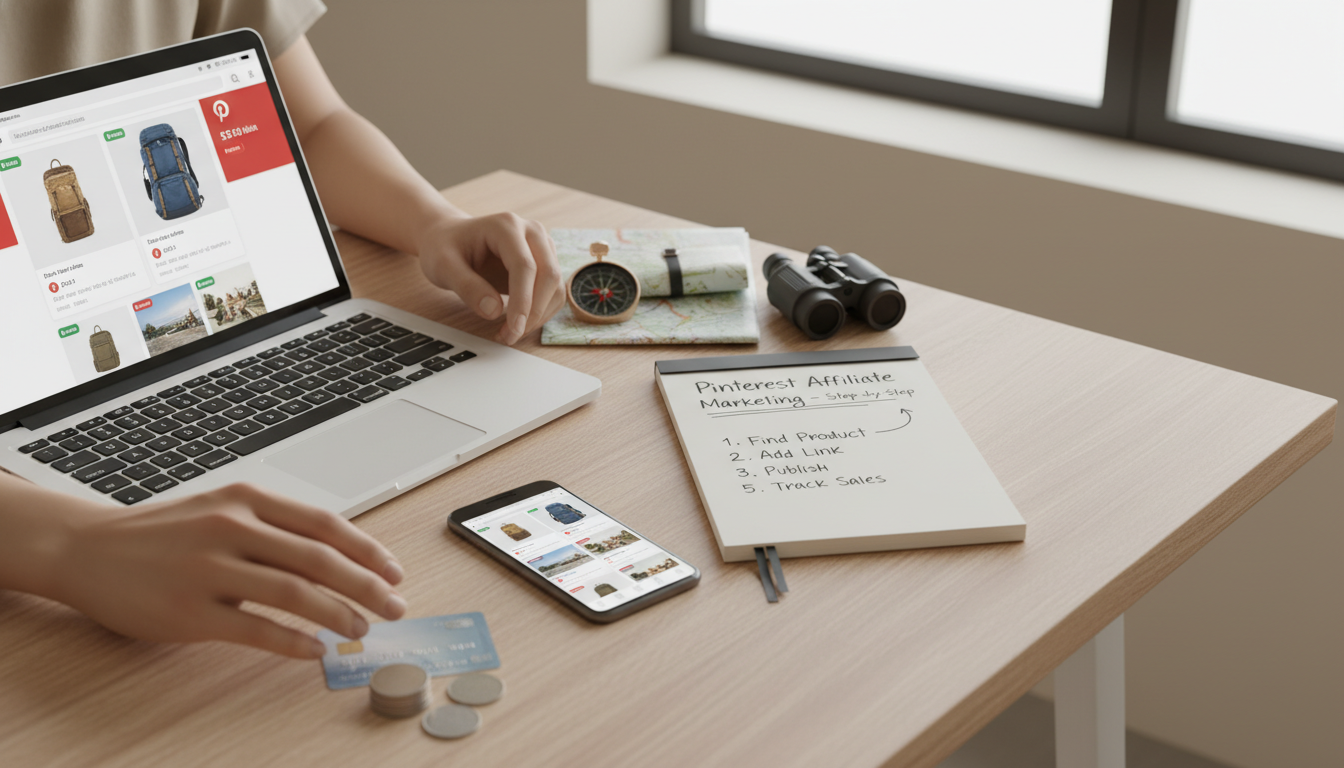
How does Pinterest affiliate marketing work for beginners step by step?
Pinterest affiliate marketing works by publishing Pins that lead to products or content containing affiliate links. When someone clicks and completes a qualifying purchase (or other required action) through your tracked link, you earn a commission. The key is to pair helpful, search-friendly Pins with offers that match what people are already looking for on Pinterest.
Step-by-step: Getting started the right way
1) Pick a niche and a realistic product range
Start with a topic you can consistently create Pins for (home finds, fashion basics, beauty tools, hobby supplies). Choose items with clear benefits and broad appeal so you can make multiple angles of content without repeating yourself.
2) Join affiliate programs and confirm Pinterest is allowed
Apply to affiliate programs (brand programs, affiliate networks, or marketplaces). Before posting, read each program’s terms to confirm affiliate links are allowed on Pinterest and whether link cloaking, coupons, or direct-to-merchant links are permitted.
3) Set up Pinterest for publishing
Create a Pinterest Business account so you can access analytics and profile features. Build a few focused boards that match your niche, then write clear board titles and descriptions that reflect what people search for.
4) Create a landing path that converts
Many beginners do best sending traffic to a simple blog post or curated “best of” page that explains options and includes affiliate links. This gives context, builds trust, and can improve conversions compared to dropping cold traffic onto a product page.
5) Design Pins that earn the click
Use vertical images, readable text overlays, and specific promises (for example: “5 space-saving pantry organizers”). Save multiple Pins per page/product angle, and keep the visuals consistent so your profile looks cohesive.
6) Publish, disclose, and stay compliant
Add a clear affiliate disclosure near the link destination (and follow any program rules). Avoid misleading claims, and ensure each Pin accurately matches the page it links to.
7) Track results and double down
Watch which Pins get saves, outbound clicks, and conversions. Update underperforming creative, test new titles, and focus on the boards and topics that drive revenue.
For a deeper walkthrough and extra beginner tips, visit the full guide here: https://luxian.shop/blog/how-does-pinterest-affiliate-marketing-work-for-beginners-step-by-step/.
FAQ
Do I need a blog to do Pinterest affiliate marketing?
No, but a blog or simple landing page often improves conversions by adding context, comparisons, and trust before sending someone to a product page.
Recommended for you
Pinterest Affiliate Links: Direct Pins, Rules & Tips
May 21, 2026













Leave a comment