-
Shop
- Advanced Technologies
- AI Skills Mastery 2026 Collection
- Beauty
- Best-Sellers
- Calvin Klein
- Car Accessories
- Car Buying & Ownership
- Dating & Social Confidence
- Dating & Social Skills
- Denim
- 7FOR
- AGOLDE
- Antony Morato
- Armani Exchange
- Boss
- Brunello Cucinelli
- Calvin Klein Jeans
- Costume National
- Desigual
- Diesel
- Dolce & Gabbana
- Dsquared²
- Ermanno Scervino
- Fendi
- Gianni Lupo
- Guess Jeans
- Ichi
- Just Cavalli
- Lee
- Levi's
- Liu Jo
- Morgan De Toi
- Mother Denim
- Only
- Pepe Jeans
- Pinko
- Replay
- Tommy Hilfiger Jeans
- Valentino
- Vero Moda
- Digital Resources
- Education & Learning
- Family & Parenting
- Fashion
- Alexander McQueen
- Bags & Wallets
- Balenciaga
- Belts
- Bottega Veneta
- Brunello Cucinelli
- Burberry
- Chanel
- Chloé
- Dior
- Dolce & Gabbana
- Etro
- Fendi
- Gucci
- Hats & Hair Accessories
- Jacquemus
- Jewelry
- Jil Sander
- Jimmy Choo
- Keychains
- Kiton
- Miu Miu
- Off-White
- Prada
- Rick Owens
- Saint Laurent
- Shoes
- Socks & Tights
- Sunglasses
- The Row
- Tom Ford
- Valentino
- Valentino Garavani
- Versace
- Vivienne Westwood
- Watches
- Fashion & Style
- Fashion Accessories
- Financial Education
- Find Your Path Collection
- Fitness
- Furniture
- Gadgets
- Health & Beauty
- Health & Wellness
- Home & Garden
- Home & Kitchen
- Home Styling & Organization
- Home Supplies
- Kids & Babies
- Kitchen
- Lighting
- Nike
- Online Business
- Online Business for Beginners
- Parenting
- Patio, Lawn & Garden
- Personal Growth
- Pet Care
- Pet Supplies
- Pets
- Smart Life with IA
- Sport & Outdoors
- Super Deals
- Travel
- Wealth
- Wealth Building
- Wellness
- YouTube Shorts Best-Sellers
- Popular
- Best deals
Workout Win Checklist: Fat Loss, Muscle Gain, Consistency
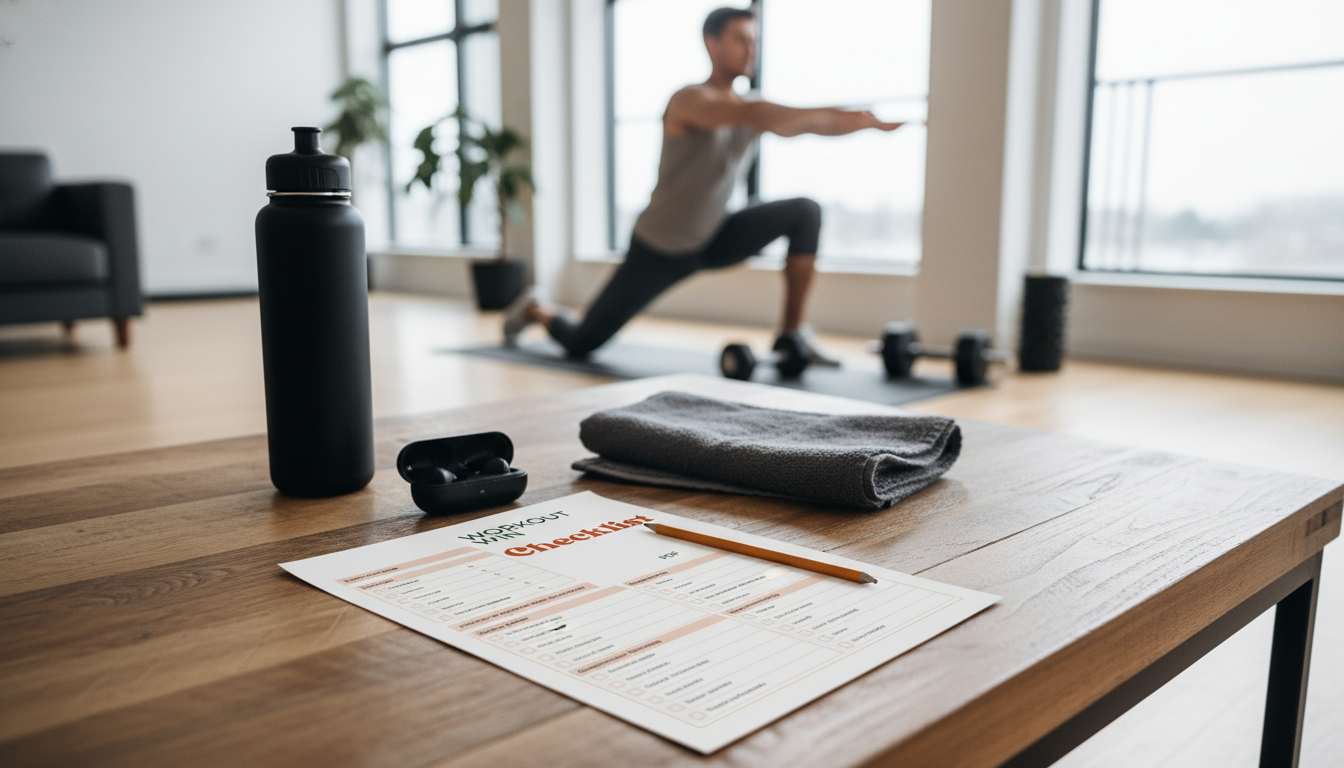
Your Workout Win Checklist: A Simple System for Fat Loss, Muscle Gain, and Staying Consistent
Results come from a routine that is repeatable, progressive, and realistic. This guide turns training into a clear checklist: strength work to build muscle, conditioning to support fat loss, and recovery habits that keep the plan sustainable week after week.
The workout “win” framework: three outcomes that work together
Most plans fail because they chase one goal while ignoring the other two. A better approach is treating fat loss, muscle gain, and consistency as a three-part system.
- Fat loss comes from a consistent calorie deficit over time; training helps protect muscle and keeps performance from crashing.
- Muscle gain comes from progressive overload, enough hard sets per muscle group per week, plus adequate protein and sleep.
- Consistency is built by removing friction: shorter sessions done regularly beat “perfect” sessions done rarely.
- Practical target: 3–5 training days per week, with 2–4 strength days as the anchor.
For general exercise guidelines that support long-term health and fitness, see the CDC’s overview of physical activity basics: https://www.cdc.gov/physicalactivity/basics/index.htm.
Your Workout Win Checklist (use this before every week starts)
Think of your week like a pre-flight check: if these boxes are set before Monday, you’re far more likely to finish strong by Sunday.
- Pick a schedule first: choose 3, 4, or 5 training days that fit the calendar (not the other way around).
- Choose a primary strength split: full-body (3 days), upper/lower (4 days), or push/pull/legs + 2 short add-ons (5 days).
- Set weekly minimums: 2 strength sessions + 6,000–10,000 steps/day (or 2–3 cardio sessions) as a baseline.
- Plan the non-negotiables: warm-up (5–8 min), 3–5 big lifts, 1–3 accessories, 5 min cool-down.
- Progression rule: add 1–2 reps per set OR 2.5–5% load when all sets hit the top of the rep range with good form.
- Recovery checks: 7+ hours sleep goal, 1–2 full rest days, and soreness that resolves within 48–72 hours.
- Consistency safeguard: define a backup 20-minute session for busy days (one compound lift + one accessory + brisk incline walk).
If you want a simple, printable system you can reuse every week, the Your Workout Win Checklist – The Ultimate Guide to the Most Effective Workout Routine for Fat Loss, Muscle Gain & Consistency helps you plug in your schedule, exercises, progression targets, and weekly completion in one place.
Strength training that supports both fat loss and muscle gain
Strength training is the “anchor” because it maintains (and can build) muscle while you diet, and it gives you clear numbers to progress: reps, sets, and load.
- Prioritize compound patterns: squat/lunge, hinge, push, pull, carry, core/bracing.
- Effective set guideline: most people progress well with ~8–16 hard sets per muscle group per week, scaled to experience and recovery.
- Rep ranges that work: 5–10 reps for main lifts, 8–15 for accessories, 12–20 for isolation and metabolic finishers.
- Intensity target: stop most sets with 1–3 reps in reserve; push closer to failure mainly on safer accessory movements.
- Example exercise menu: goblet squat or back squat; Romanian deadlift; bench press or push-ups; row or pull-down; overhead press; split squat; hip thrust; face pulls; planks/dead bugs.
Over time, small progress beats big randomness: add a rep, add a little load, or clean up technique—then repeat.
Conditioning for fat loss without sabotaging strength
Conditioning should support your lifting, not drain it. The simplest “high return” options are walking and zone 2 cardio (a pace where you can speak in short sentences).
If you want a research-based starting point for balancing different fitness qualities, the ACSM position stand is a helpful reference: https://pubmed.ncbi.nlm.nih.gov/19204567/.
Weekly routines you can actually repeat (choose one)
| Schedule | Strength days | Conditioning focus | Notes |
|---|---|---|---|
| 3-day Full Body | 3 | 2 low-intensity sessions + steps | Easiest to sustain; progress with small weekly load/rep increases |
| 4-day Upper/Lower | 4 | 1–3 low-intensity sessions + steps | Great balance of volume and recovery |
| 5-day Hybrid | 4–5 | Steps + 1 low-intensity + optional short intervals | Best when sleep and nutrition are consistent |
Progress tracking that prevents plateaus
Nutrition basics for recomposition (simple targets)
For a plain-language overview of protein, see the NIH Office of Dietary Supplements fact sheet: https://ods.od.nih.gov/factsheets/Protein-Consumer/.
Common reasons routines fail (and quick fixes)
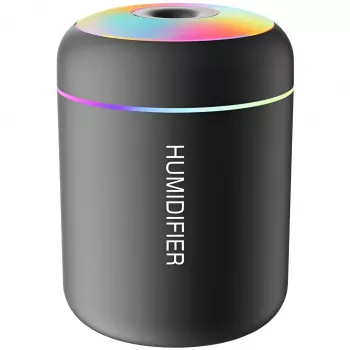
To make recovery easier at home—especially in dry rooms where sleep quality can take a hit—consider the Mini USB Aroma Humidifier & Essential Oil Diffuser with Soft LED Light as a simple bedtime environment upgrade.
Put it all together with the checklist guide
If you want everything in one streamlined format, start here: Your Workout Win Checklist – The Ultimate Guide to the Most Effective Workout Routine for Fat Loss, Muscle Gain & Consistency.
FAQ
What is the best workout routine to gain muscle and lose fat?
A routine that emphasizes progressive strength training 3–4 days per week, adds sustainable conditioning (daily steps plus zone 2), and is paired with a small calorie deficit and high protein tends to work best. Focus on compound lifts, keep weekly volume consistent, and track performance so you can progress without guessing.
What is the best workout for weight loss for females?
The foundation is the same: strength training to preserve or build muscle plus a sustainable calorie deficit. A practical plan is 3–4 strength sessions weekly, daily steps, and 1–2 zone 2 sessions, adjusting intensity and volume based on recovery and real-life stress.
Recommended for you

925 Sterling Silver on Men’s Wedding Bands Explained
May 15, 2026
Jimmy Choo Hanover 65: Amethyst Glitter Boot Styling
May 15, 2026













Leave a comment